
Must Be 21 To Enter
By entering this site you are agreeing that you are at least 21 Years of Age or older.
I AM 21 OR OLDERPavé Strain Indica or Sativa? a Closer Look
.svg)

.png)
Have you ever picked up a premium flower like Pavé and wondered why the menu still forces it into the old indica or sativa box? That question sounds simple, but for a new patient it often hides the issue, which is how a strain behaves in the body, not how it was marketed. Pavé is a good case study because it shows why modern cannabis buying works better when you look at genetics, chemistry, and real-world effects instead of chasing a label.
Understanding the Indica vs Sativa Question
A first-time patient usually wants one clean answer. Is Pavé an indica or a sativa? The honest answer is that Pavé is widely documented as a balanced hybrid, most often listed as 50% indica / 50% sativa, so the old either-or framing doesn't really fit it difference between indica and sativa. That's why a menu label can be misleading if you're trying to predict how you'll feel after a session.
Why the label feels familiar but incomplete
Traditional strain language still helps people talk about broad patterns. If someone says “indica,” most patients picture a heavier body feel, a quieter night, or a strain they'd use after work. If someone says “sativa,” they usually mean something more mentally active, better for daytime focus or a creative block. Those shortcuts are useful at the counter, but they're not the same thing as a full effect profile.
Pavé shows the gap clearly. A balanced hybrid can lean calm without turning into a couch-lock strain, and it can stay mentally bright without becoming jittery. That's why newer boutique strains often confuse patients who expect a perfect fit inside the old binary.
Practical rule: if a strain's label and its chemistry point in different directions, trust the chemistry first.
The takeaway is simple. The indica or sativa question is a starting point, not the final answer. Pavé works better as a teaching example than as a trivia question, because it pushes you to ask what the plant is made from and how that composition is likely to feel in actual use.
The Indica vs Sativa Framework Explained
The old framework came from a practical need. People wanted an easy way to describe cannabis effects, so indica became shorthand for relaxing, body-centered use, while sativa became shorthand for a more uplifting, head-focused experience. For many patients, that shorthand still maps onto real choices, like reaching for something calming in the evening or something more alert before a low-stress afternoon.
What those terms usually mean in practice
A patient using an indica-leaning strain might be trying to settle down after a long day, ease into sleep, or take the edge off discomfort that makes it hard to rest. A person picking a sativa-leaning strain might want to stay conversational, paint, walk the dog, or handle a daytime errand without feeling slowed down. Those are effect-based descriptions, and they're the part most care about.
The problem is that the old labels were built for simpler cannabis markets. Modern dispensary shelves are full of hybrids that combine traits from both sides, so a strain can feel balanced, layered, or variable depending on the batch. That's why a single label often misses the nuance that matters most to patients.
A visual comparison can help anchor the old framework without overselling it.
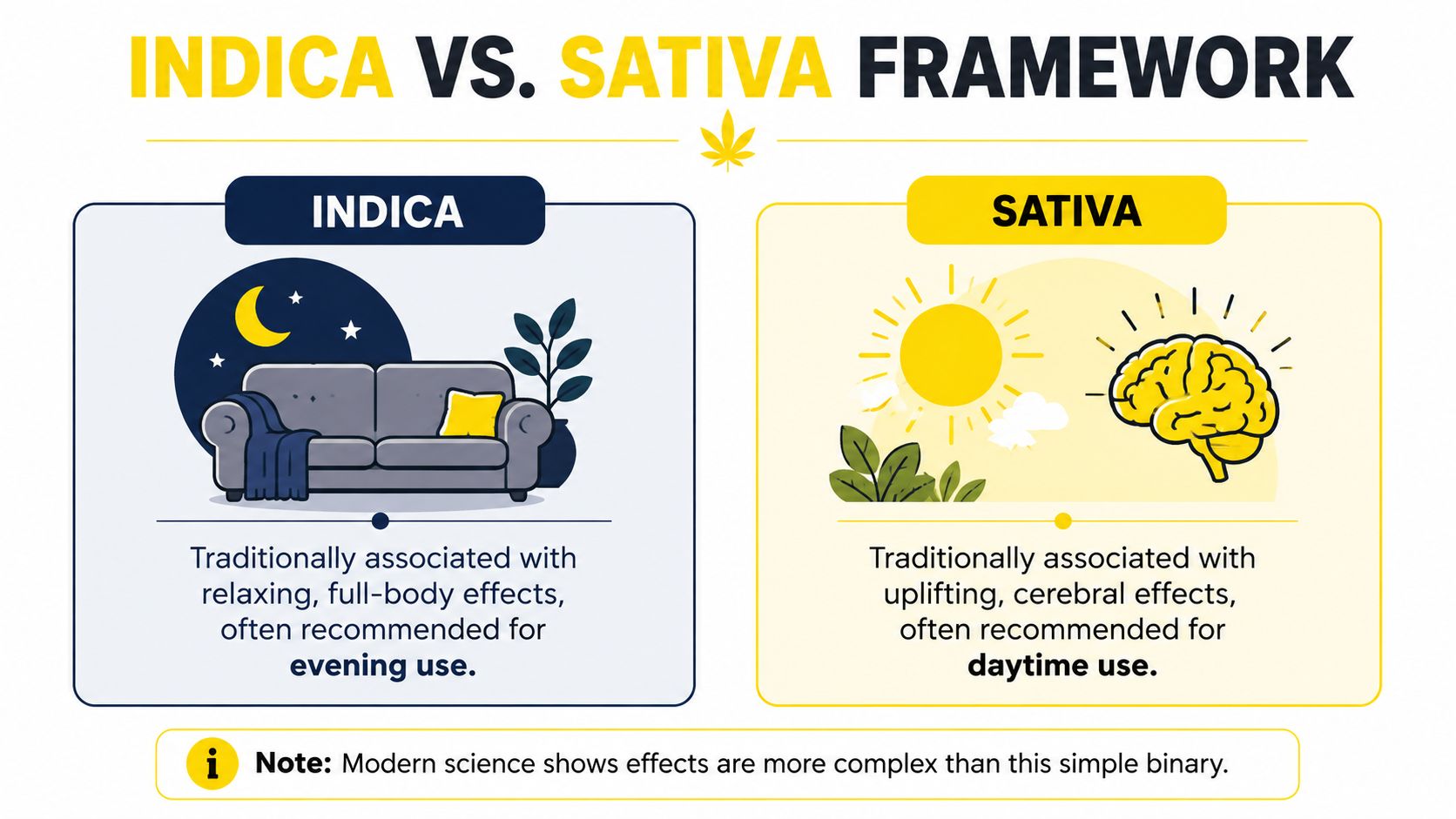
That's where the framework breaks down. It's useful for conversation, but it doesn't fully describe modern flower. Once you understand that, Pavé stops looking like a contradiction and starts looking like a normal product of today's breeding culture.
Why Most Modern Premium Strains Are Hybrids
Premium dispensary flower usually isn't bred to be “pure” anything. It's bred to combine traits that sell well and feel consistent, which is why hybrids dominate the modern menu. If you're browsing best hybrid strains, you're already seeing the market reality that matters most to patients, balanced crosses are often the point, not the compromise.
Breeders are optimizing for experience, not purity
A boutique breeder wants flavor, potency, aroma, and repeatable effects. That means crossing different genetics until a flower hits a target profile that feels cohesive. Pavé fits that pattern because it's tied to contemporary breeding rather than old landrace-style categories, and the strain's identity reflects deliberate mixing rather than botanical purity.
Compound Genetics is part of that newer wave of cultivation culture, where the goal is often a specific experience instead of a strict indica or sativa badge. Patients benefit from that shift because the final product can be more predictable than a strain marketed only by the old labels. In plain language, breeders are trying to make flower that tastes good, tests high, and behaves the way the menu says it should.
Modern hybrids are often easier to shop by effect, because the breeder had a clear target from the start.
Pavé is a strong example of that approach. It's not trying to prove that indica or sativa matters more. It's showing that balanced hybridization can create a strain with enough structure to satisfy different use cases, from evening winding down to a lighter creative session. That's a more practical way to shop, especially if you're a patient trying to match cannabis to daily life.
Pavé Strain Genetic Background and Classification
What does Pavé tell a patient about indica or sativa? The clearest answer starts with its parentage, Paris OG × The Menthol, which is the most reliable marker of where the strain comes from Pavé strain genetics. That lineage is why Pavé is usually described as a 50% indica / 50% sativa hybrid, not as a strain that belongs cleanly on one side of the old divide. For anyone trying to make a practical choice, the breeding history is more useful than a single label.
What the parents suggest
Paris OG gives the strain a cue that many buyers associate with a grounded, kush-like feel. The Menthol suggests a cooler, minty edge that often comes through in aroma and taste. Put them together, and Pavé reads less like a classic sleepy indica or a sharp, racy sativa, and more like a cultivar built to sit between those two experiences. That is why strain classification works better here as a starting point than as a final answer, much like the way a patient might compare Granddaddy Purp's indica or sativa traits before deciding what kind of effect they want.
The chemistry also matters. Verified strain references commonly place Pavé THC in the 22% to 29% range, with some commercial lab-tested batches reaching 28% to 32% THC and elite cuts reportedly hitting 34% Pavé strain overview. CBD is usually very low, often around 1% or below 0.2% in lab summaries, so there is not much CBD to soften the THC-driven feel. Another independent reference notes that Pavé often finishes flowering in 8 to 9 weeks indoors and is often priced around $65 to $80 per one-eighth ounce in regulated U.S. markets Pavé seeds and pricing.
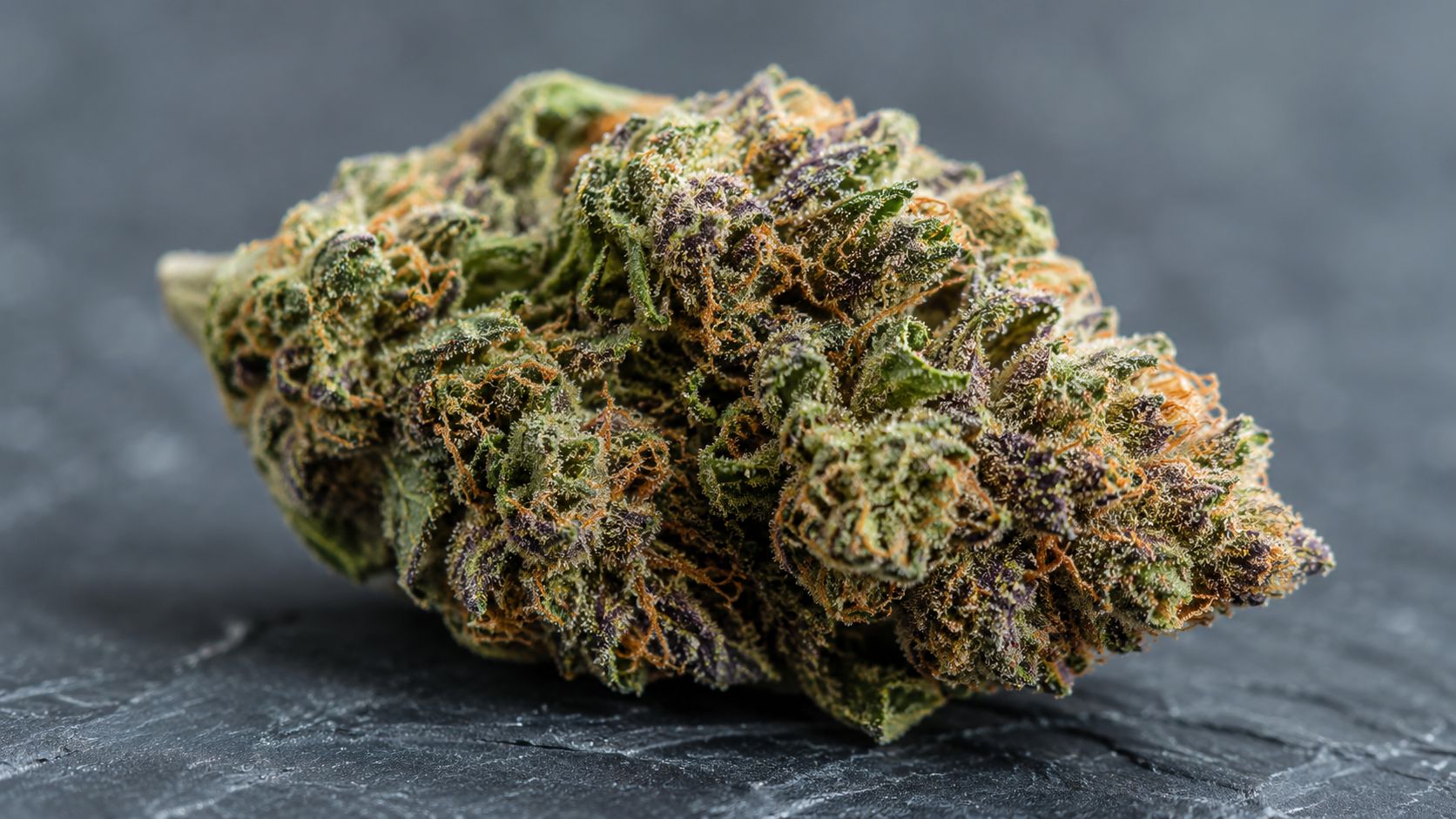
Consumer shorthand: if a strain is 50/50 and high in THC with very little CBD, expect a strong, balanced experience rather than a one-direction effect.
That balance is the main reason Pavé gets treated like a premium hybrid. The genetics point to mix, but the chemistry pushes the flower toward a heavier, THC-forward profile that many patients read as evening-friendly without making it a pure knockout strain.
Expected Effects and Medical Applications of Pavé
A balanced hybrid can still hit hard. Pavé tends to show mixed effects rather than a light, single-track experience, which is why some patients keep it in mind for different parts of the day. One person may find it fits a creative afternoon, while another may prefer it as a wind-down option, and the difference usually comes down to dose and tolerance.
How the balance tends to show up
The indica side may show up as body relaxation, less physical tension, and a calmer overall feel after a long day. The sativa side may show up as a brighter mood, easier conversation, or a bit more mental openness before you settle in. That is why balanced hybrids often work for people who do not want something that feels fully sleepy or fully stimulating.
For medical patients, that middle ground can fit several everyday needs. A patient dealing with stress may want something that settles the body without making the mind feel shut down. Someone using cannabis for pain may want a flower that eases discomfort while still letting them stay awake and functional. People who struggle with appetite or sleep sometimes choose a hybrid because it can support an evening routine without feeling too heavy too soon.
Dose matters more than the label if you are new to a strong flower like Pavé. Start small, wait long enough to understand how your body responds, and only increase if the first experience feels manageable. High-THC flower can surprise people who are used to lighter products.
Choosing the right product for sleep, pain, and anxiety helps when you match the strain's intensity to your own tolerance, not to the menu's mood words.
A high-THC hybrid can help with relief, but only if the dose stays small enough for you to read the effect clearly.
The practical use cases are easy to see. A patient who wants to unwind after work may use Pavé in the evening. Another person may find it better for a low-pressure social setting or a quiet creative session. The point is not that everyone will feel the same thing, it is that the strain's balance gives you more than one reasonable way to use it.
Cannabinoid and Terpene Profile Breakdown
Why does Pavé feel the way it does for so many patients, even before you start comparing it to indica or sativa? The answer is in the chemistry. Pavé is described as a high THC flower with very low CBD, usually around 1% or below 0.2%, so the psychoactive part of the experience tends to take the lead Pavé strain overview. For patients who are sensitive to THC, that matters more than any old category label.
What the chemistry is telling you
Low CBD means there is less of the softening effect some patients look for in flower. That is one reason Pavé can feel strong even when the strain still comes across as balanced overall. If you are shopping for relief and want to avoid a product that hits too hard, the lab report is more useful than the strain name by itself.
The flavor and aroma usually lean minty-gassy or kush-forward, which fits both the parentage and the boutique style many patients expect from this kind of flower. Terpenes are the compounds that shape that smell and add another layer to the experience, and what terpenes in weed do is help explain why two batches with the same strain name can still feel a little different if the terpene mix changes.
A few simple shopping habits make the profile easier to read:
- Check THC first: flower with little CBD can feel stronger than the menu makes it seem.
- Read terpene notes: mint, gas, spice, and kush-like descriptors often point toward the strain's overall direction.
- Ask about batch freshness: aroma and flavor are easier to judge when the flower has been stored well.
- Compare the lab report to your tolerance: if you are new, the strongest-looking jar is not always the safest starting point.
That chemistry also helps explain the premium price. Market listings place Pavé around $65 to $80 per one-eighth ounce, which fits its high-potency, boutique position in regulated markets Pavé seeds and pricing. Price alone does not tell you whether a flower is right for you, but it does show why dispensaries often treat Pavé as a top-shelf option.
Buying Pavé in DC as a Medical Patient
DC patients should shop Pavé the same way they'd shop any high-THC flower, with attention to potency, freshness, and format. A clean-looking jar doesn't guarantee a good fit, and a famous strain name doesn't guarantee the batch will match your needs. A smart purchase starts with the lab report, then moves to smell, appearance, and how you plan to use it.
A simple way to evaluate the flower
First, check the cannabinoid numbers. Pavé's THC can run high, so if you're a new patient, a lower starting dose usually makes more sense than chasing the strongest batch on the shelf. Second, ask about terpene content and aroma, because those clues help you predict whether the flower leans more relaxing or more upbeat. Third, look at the bud structure, trim, and moisture level, because dry, overhandled flower tends to lose the details that make a premium strain worth buying.
Product format matters too. Flower gives you the clearest read on aroma and flavor, while pre-rolls are easier if you want convenience. Edibles, vapes, and concentrates can each fit a different tolerance level, but they also change how fast and how strongly the effects arrive. If you're trying Pavé for the first time, flower is often the easiest format for learning how the strain behaves.
At a DC medical dispensary, staff can help you compare options and decide whether a balanced hybrid is the right fit for the day you're planning. Mr. Nice Guys DC carries flower, pre-rolls, vapes, edibles, concentrates, topicals, and tinctures, and patients can use in-store pickup, curbside pickup, or delivery in DC and nearby areas when they need a straightforward way to order.
A few safety habits make the difference between a helpful session and an unpleasant one. Start small, wait before redosing, and don't mix strong flower with a busy schedule if you're still learning your limits. If you keep notes on what you buy and how it feels, you'll get much better at spotting which batches and formats work for you.
Making Informed Choices Beyond the Label
Pavé is a good reminder that the label on the jar is only part of the story. As noted earlier, it is a balanced 50/50 hybrid with Paris OG × The Menthol genetics, and its high THC and very low CBD help explain why the effects often feel more tied to chemistry than to the old indica or sativa split. If you want better results from cannabis, that is the kind of detail that matters.
A simple buying habit makes strain choice easier. Read the genetics, check the lab results, ask about terpene notes, and match the product format to your tolerance and your day. That approach works for Pavé, and it also works for many modern hybrids on a DC dispensary menu.
Bottom line: do not ask only whether a strain is indica or sativa. Ask what it is made from, how strong it is, and whether that profile fits your goal.
Once you start shopping that way, the menu gets easier to use. Strain names stop feeling like riddles and start working like clues.
The same habit helps with format choices, too. Flower gives you the clearest read on aroma and flavor, while pre-rolls are easier if you want convenience. Edibles, vapes, and concentrates each suit a different tolerance level, but they also change how fast the effects start and how long they last. If you are trying Pavé for the first time, flower is often the easiest format for learning how the strain behaves.
At a DC medical dispensary, staff can help you compare options and decide whether a balanced hybrid fits the day you have planned. Mr. Nice Guys DC carries flower, pre-rolls, vapes, edibles, concentrates, topicals, and tinctures, and patients can use in-store pickup, curbside pickup, or delivery in DC and nearby areas when they need a straightforward way to order.
A few safety habits can make the difference between a helpful session and an unpleasant one. Start small, wait before redosing, and do not mix strong flower with a busy schedule if you are still learning your limits. If you keep notes on what you buy and how it feels, you will get much better at spotting which batches and formats work for you.
Mr Nice Guys DC
At Mr. Nice Guys DC, we’re more than just a cannabis delivery service — we’re passionate advocates for quality, convenience, and community. With years of experience in the cannabis industry, our team is dedicated to educating and empowering customers across Washington, D.C. Whether you're a seasoned user or just starting your cannabis journey, our blog delivers trusted tips, product insights, and the latest updates from the world of weed. Stay informed, stay elevated.
