
Must Be 21 To Enter
By entering this site you are agreeing that you are at least 21 Years of Age or older.
I AM 21 OR OLDERA Patient's Guide to Chronic Weed Strains for Wellness
.svg)

.png)
Let's clear this up right off the bat: "chronic" isn't a single type of cannabis. It’s a term for exceptionally potent, top-shelf cannabis known for its powerful and long-lasting effects. Think of it like the difference between your standard drip coffee and a rich, bold espresso—both get the job done, but one delivers a significantly more intense experience.
What People Really Mean by "Chronic Weed"
When you hear someone talk about "chronic weed strains," it's easy to get a little mixed up. The term blew up in '90s hip-hop, quickly becoming shorthand for the best, most powerful cannabis you could find. And while there is a specific strain out there actually named ‘Chronic,’ the word has grown into a broader label for any top-shelf flower that delivers a superior high.
This distinction is super important for both medical patients and seasoned smokers. Knowing that "chronic" refers to a quality tier instead of a specific plant helps you make smarter choices at the dispensary. It’s a signal that a strain is packing a high concentration of cannabinoids like THC, a rich terpene profile, and effects that you'll definitely feel.
What Makes a Strain "Chronic" Quality?
So, what elevates a simple flower to this elite status? It comes down to a perfect storm of expert cultivation, killer genetics, and meticulous care. Just like a master chef uses only the finest ingredients, an expert grower cultivates chronic-level cannabis by nailing a few key factors.
Here’s what sets it apart:
- A Potent Cannabinoid Profile: These strains almost always have high THC levels, often pushing past 20%, which is the engine behind their powerful effects. For example, a standard strain might sit at 15% THC, while a chronic-quality version of OG Kush could easily test at 25% or higher.
- Rich Terpenene Content: That strong, beautiful aroma is a dead giveaway for quality. Terpenes are the compounds that give each strain its unique scent and flavor, and they play a huge role in shaping the high. For instance, a chronic-quality Gelato strain will have a powerful, sweet, and fruity smell you can notice as soon as you open the jar.
- Meticulous Cultivation and Curing: You can't rush greatness. Proper growing, drying, and curing techniques are what preserve the flower's potency and prevent that harsh, scratchy smoke, leaving you with a smooth and flavorful experience.
Basically, "chronic" is a promise of a premium product. It's the difference between a generic store-brand item and a carefully crafted artisanal good.
For a lot of people, especially those managing serious symptoms, the consistency and strength of chronic strains offer reliable relief that lower-quality products just can't touch. The goal is to get the effects you need with less consumption.
This focus on effects is why it pays to understand the different types of cannabis out there. For instance, knowing the difference in the typical effects of indica vs. sativa can help you pick a chronic strain that lines up with what you're looking for. Whether you want the deep relaxation of an indica or a creative kick from a sativa, choosing a chronic-quality option ensures you’re getting the best version of that experience.
This guide will set you up to explore these powerful strains, helping you spot them in the wild and find the best options at trusted spots like Mr. Nice Guys DC.
What Gives a Cannabis Strain Its Chronic Quality
So, what’s the real secret sauce that turns a good cannabis strain into a truly chronic one? It's not just about chasing the highest THC number you can find on a label. Real chronic quality comes from a delicate dance between genetics, chemistry, and the grower's expert touch—a combination that creates an experience that's potent, packed with flavor, and seriously effective.
Think of it like a world-class band. The final sound depends on every single musician working in perfect harmony. In the world of cannabis, these elements come together to create what we call the entourage effect, where the whole experience is way bigger than the sum of its parts.
The Symphony of Cannabinoids and Terpenes
At the core of any chronic weed strain are two key groups of chemical compounds: cannabinoids and terpenes. Each one plays a unique but collaborative role in shaping the strain's distinct character and effects.
Imagine cannabinoids like THC (tetrahydrocannabinol) and CBD (cannabidiol) as the lead singers in the band. THC is the powerhouse vocalist, hitting the high notes and delivering the primary psychoactive effects and serious pain relief. CBD is the steady rhythm section, keeping everything balanced with its anti-inflammatory and anti-anxiety properties. For a deeper look, you can learn more about how compounds like THCA convert into the active THC that really defines a potent experience.
But a great singer alone doesn't make a hit record. That’s where terpenes come in.
Terpenes are the aromatic compounds that give cannabis strains their signature smells and tastes—from zesty citrus and sharp pine to sweet berry and pungent diesel. More importantly, they’re the backup singers and instrumentalists, tweaking and boosting the effects of cannabinoids to create a more targeted and nuanced high.
This synergy is what truly makes a chronic weed strain stand out. A high-THC strain with a weak terpene profile is like a killer guitar solo with no band behind it—sure, it's loud, but it’s missing all the depth and soul.
How Terpenes Shape Your Experience
Let's break down how specific terpenes can steer the effects of a strain, turning a generic high into something much more specific and therapeutic.
- Myrcene: This is one of the most common terpenes, known for its earthy, musky scent. Strains loaded with myrcene, like OG Kush, tend to deliver deeply relaxing and sedative effects, making them perfect for tackling pain and insomnia.
- Limonene: Just like it sounds, this terpene is found in citrus peels and offers a bright, zesty aroma. Strains rich in limonene, like Blue Dream, are often linked to mood elevation and stress relief, giving you an uplifting buzz without knocking you out.
- Caryophyllene: With its spicy, peppery kick, caryophyllene is unique because it also acts like a cannabinoid, interacting directly with your body's endocannabinoid system. This gives it powerful anti-inflammatory and pain-relieving properties, making it a key player in strains used for chronic pain.
Getting to know these compounds helps you look past simple indica or sativa labels and get a real feel for how a strain will actually hit.
Genetics and Cultivation: The Final Polish
A strain's true potential is locked in its DNA. Its genetic lineage is the blueprint that lays out its likely cannabinoid and terpene profile. Breeders spend years crossing plants to lock in desirable traits, creating the legendary chronic weed strains we know for their consistent power and effects.
But even the best genetics mean nothing without an expert hand guiding them. The final, make-or-break step is the curing process. This is the art of slowly drying and aging the cannabis flower to preserve all those delicate compounds.
A proper cure ensures that the cannabinoids and terpenes are at their absolute peak, delivering the full-throttle flavor and potency you expect from a chronic-level product. A rushed or sloppy cure can torch these volatile compounds, leaving you with a harsh smoke and a flat, one-dimensional high. It's this last, careful step that separates the top-shelf stuff from everything else.
Finding the Best Chronic Strains for Pain Relief
When you're dealing with pain that just won't quit, finding something that actually works is everything. This is where certain chronic weed strains—especially heavy-hitting indicas and indica-leaning hybrids—really come into play. Their powerful, body-focused effects can offer a serious break from the grind of nerve, inflammatory, or muscle pain, making them a go-to for a lot of people.
And it’s not just a niche thing. The use of high-potency cannabis for pain is massive. In the global medical cannabis market, chronic pain management is the single biggest reason people turn to cannabis, making up about 41% of the market. That translates to an incredible USD 8.73 billion in value. It just goes to show how many people are relying on these potent strains to get through their day. You can dig into more of that data on the medical cannabis market on strategicmarketresearch.com.
Matching the Strain to Your Pain
Pain isn’t one-size-fits-all, and neither are cannabis strains. The real trick is to match a strain’s unique profile—its mix of cannabinoids and terpenes—to the specific kind of pain you're feeling. It’s about moving beyond just looking for the "strongest" stuff and finding a strain that’s genuinely effective for you.
This flowchart breaks down the pillars of what makes a chronic strain truly premium, from its genetics all the way to its terpene profile and the final cure.
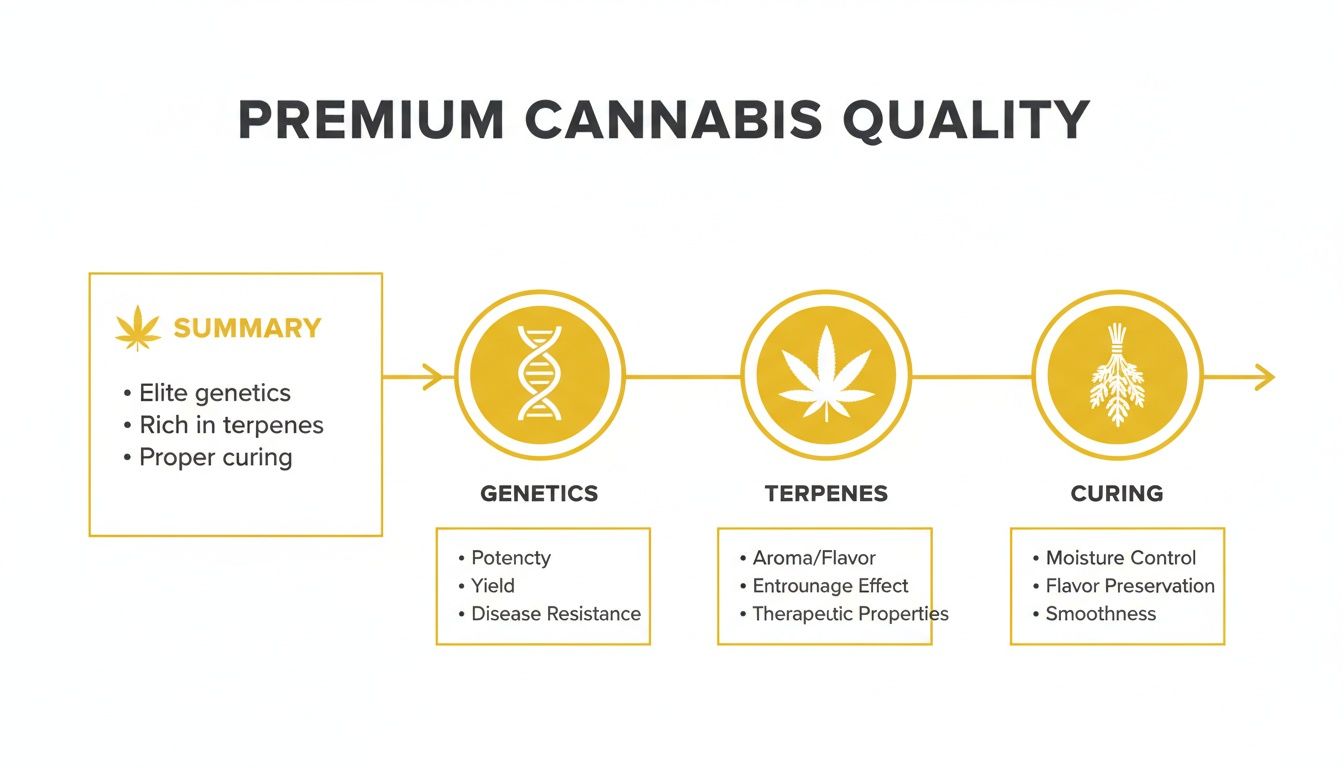
Getting a handle on these factors helps you spot the kind of flower that will deliver the potent, well-rounded effects you need for real pain relief.
Top Chronic Strains for Pain Management
While tons of strains can help with pain, a few legendary indicas have built a solid reputation for being exceptionally good at it. It's their specific cocktail of terpenes that makes them so well-suited for knocking out tough symptoms.
Comparing Chronic Strains for Pain Relief
To make it easier to see what's what, here's a quick look at some of the best indica-dominant strains for chronic pain. This table highlights their typical effects and the key terpenes that do the heavy lifting.
This is just a starting point, of course. Your own experience might vary, but these strains are legends for a reason—they consistently deliver for people seeking relief. Let's dive a little deeper into a couple of them.
OG Kush: A Versatile Powerhouse
OG Kush is a name everyone knows. This world-famous hybrid is known for its complex smell of fuel, skunk, and spice. It delivers a heavy, happy high that just melts away stress and physical tension, making it a staple for medical users.
- Primary Terpenes: Myrcene, Limonene, Caryophyllene
- How It Works: The myrcene brings that classic sedating, muscle-relaxing vibe. Limonene helps lift your mood, which is huge when you’re dealing with the mental fatigue of constant pain. But the secret weapon is caryophyllene—it actually interacts with the body's CB2 receptors to directly fight inflammation, offering pain relief without adding too much haziness.
- Best For: OG Kush is awesome for managing stress-induced pain, deep muscle aches, and nerve pain. Its balanced effects are perfect for evenings when you need to unwind but aren't quite ready to pass out. For example, after a long day that leaves your back aching, a few puffs of OG Kush can ease the muscle tension without immediately putting you to sleep, allowing you to relax on the couch and watch a movie comfortably.
OG Kush is the perfect example of how terpenes fine-tune an experience. The caryophyllene in this strain acts like a targeted anti-inflammatory, working in tandem with THC to give you comprehensive relief.
Granddaddy Purple: The Ultimate Relaxer
With its deep purple colors and sweet grape smell, Granddaddy Purple (GDP) is a classic indica that’s all about profound relaxation. This is the strain you reach for on those nights when pain makes it impossible to get comfortable or find sleep.
- Primary Terpenes: Myrcene, Pinene, Caryophyllene
- How It Works: GDP is loaded with myrcene, the terpene that’s largely responsible for that heavy "couch-lock" feeling indicas are famous for. That makes it incredibly effective for calming severe muscle spasms and easing tension throughout your entire body. The pinene helps clear away some of the potential brain fog, while caryophyllene adds its signature anti-inflammatory benefits.
- Best For: This strain is a top pick for anyone dealing with pain-induced insomnia, serious muscle spasms, or conditions like fibromyalgia. Because it’s so powerfully sedating, it’s strictly a nighttime strain. As a practical example, someone with restless leg syndrome or severe nerve pain that worsens at night might use GDP about an hour before bed to help their body relax completely and achieve deep, restorative sleep.
Choosing between strains like OG Kush and GDP really comes down to your goal. Need relief that still lets you function a bit? OG Kush is probably your best bet. If you just need to shut the pain down and get some deep, restorative sleep, GDP is the way to go. For even more options, be sure to check out our complete guide on weed strains for pain.
How Chronic Strains Help Manage Anxiety and Sleep
Beyond just tackling physical pain, the right chronic weed strains can be a game-changer for your mental wellness and for getting a genuinely restful night's sleep. If you've ever dealt with a racing mind or stress that just won't quit, the deep relaxation from a high-potency indica can feel like a long, welcome exhale.
This isn't just a coincidence. These effects are the direct result of a strain's unique cocktail of cannabinoids and terpenes working in harmony. When these compounds show up in high concentrations—like they do in chronic-level flower—they can bring on a profound sense of calm that quiets anxious thoughts and gets your body ready for sleep.
The Science of Calm: Terpenes and Cannabinoids
A strain's secret weapon against anxiety and sleeplessness is often hiding in its terpene profile. Terpenes are the aromatic oils that give cannabis its signature smell, but they do a lot more than that. They're basically the steering wheel for your high.
Take linalool, for example. It's a major player when it comes to tranquility. If you've ever used lavender essential oil to unwind, you've already felt the calming power of linalool. Strains packed with this terpene often have a soothing, almost floral scent and are known to take the edge off stress.
Then there's myrcene, which you'll recognize by its earthy, musky aroma. It’s famous for delivering that heavy, "couch-lock" feeling you get from strong indicas, making it the go-to for anyone battling insomnia.
The real magic happens when you combine calming terpenes like linalool with a high THC content. THC can help pull you out of those anxious thought loops, while the terpenes lay down a gentle, sedative foundation that eases both your mind and body.
This targeted effect has made indicas a dominant force in the medical cannabis world. In fact, indica strains are often specifically bred for 'chronic' use in treating anxiety, stress, and insomnia. They currently hold the top spot in popularity within the medical market and are set for the highest growth through 2035.
This trend is a huge part of why the global medical cannabis market is projected to skyrocket from USD 21.33 billion to an explosive USD 211.54 billion by 2035, with indicas leading the charge. You can dig into more medical cannabis market trends at rootsanalysis.com.
Top Chronic Strains for Relaxation and Sleep
Some strains have earned their legendary status by consistently delivering pure tranquility. Their genetics produce the perfect mix of compounds to help you completely unwind.
Here are a few popular chronic weed strains known for their relaxing vibes:
- Gelato: A beautifully balanced hybrid that leans indica, Gelato is famous for its sweet, dessert-like smell. It brings on a wave of bliss that just melts stress away without knocking you out completely, making it perfect for managing anxiety in the late afternoon or evening.
- Runtz: Another sweet-tasting favorite, Runtz provides a long-lasting, calming high. People often describe its effects as both happy and deeply relaxing, helping to soothe an overactive mind and ease the body into a state of rest.
- Northern Lights: This pure indica is a classic for a reason. It's a sedative powerhouse that's best saved for when you're ready to call it a night. For anyone whose anxiety or pain makes sleep feel like an impossible task, Northern Lights offers a heavy body high that can lead to deep, uninterrupted rest.
What This Looks Like in Real Life
To get a better feel for how these strains work, let's walk through a real-world scenario. Picture this: you've had a brutal day at work, and your mind is stuck replaying every frustrating detail, making it impossible to chill out.
Reaching for a strain like Gelato could help you shift gears. Its euphoric start can lift your mood and break that cycle of anxious thoughts, while the gentle body high eases physical tension. Suddenly, you might find yourself actually enjoying a movie or a quiet evening without that nagging worry in the background.
But if your only goal is to get some sleep, Northern Lights is the better move. Its heavy, sedative effects are designed to quiet both your mind and body completely. The experience is less about getting a mood boost and more about a profound physical relaxation that makes it easy to drift off and stay asleep.
To zero in on the perfect product for your needs, be sure to check out our guide on choosing cannabis for sleep, pain, and anxiety.
Using High-Potency Cannabis Safely and Effectively
When you're dealing with the incredible power of chronic weed strains, a little mindfulness goes a long way. These strains are potent, and respecting their strength is the key to unlocking a positive, therapeutic experience instead of getting knocked off your feet. This is your practical guide, built around one golden rule that applies to everyone: start low and go slow.
This isn't just about avoiding a bad time; it's about finding your minimum effective dose (MED). Think of it as the sweet spot—the smallest amount you need to get the relief you’re looking for, whether it's for pain, anxiety, or sleep, without tipping into unwanted side effects like paranoia or dizziness. Nailing your MED is the smartest way to use high-potency cannabis effectively and make your stash last longer.
Finding Your Starting Dose
Trying a new chronic strain for the first time is like dipping your toe in the water, not cannonballing into the deep end. Even if you’re a seasoned vet, a new strain's unique cocktail of cannabinoids and terpenes can hit you differently.
A great starting point is a single, small puff from a vaporizer or pipe. Then, just chill. Wait at least 15-20 minutes to see where it takes you before even thinking about round two. The goal here is to feel that first gentle wave of relief, not get completely swept away by the high.
It's an old saying for a reason: you can always take more, but you can never take less. This simple mantra is your best friend when it comes to preventing the discomfort that comes from overdoing it with a powerful strain.
By being patient, you give your body time to actually respond. This lets you dial in that perfect dose where symptoms fade away and a sense of well-being takes over.
Consumption Methods Matter
How you consume a chronic strain completely changes the game. It affects how quickly you feel it, how intense it is, and how long it lasts. Getting this right is critical for dosing correctly and staying in control of your experience.
Let’s break down the most common methods:
- Smoking and Vaping: This is the fast track. You'll typically feel the effects within minutes, which is awesome for tackling sudden issues like a pain flare-up or a spike of anxiety. The instant feedback makes it easy to adjust your dose on the fly, but it also makes it easier to overdo it if you aren't paying attention.
- Edibles: This is a totally different beast. When you eat cannabis, your liver gets involved, converting THC into a much stronger compound. The effects can take anywhere from 30 minutes to two hours to show up, and this delay is the number one reason people overconsume. They'll think it's not working and take more, only to have it all hit them like a ton of bricks later.
- Tinctures: Tinctures, dropped under the tongue (sublingually), are the happy medium. They absorb faster than edibles but slower than smoking, with effects usually kicking in within 15 to 45 minutes.
Practical Examples for Safe Dosing
Alright, let's put this into practice. Imagine you're trying a heavy-hitter like OG Kush for the first time to help with evening pain.
Scenario 1: Using a Vaporizer
You’d take one small puff. Set a timer for 15 minutes and see how you feel. If your pain has eased up a bit but you still feel clear-headed, you could consider one more small puff. This step-by-step approach keeps you in the driver's seat.
Scenario 2: Using Edibles
If you're going with an edible, start with a super low dose—think 2.5mg to 5mg of THC. After you eat it, you have to play the waiting game for at least two full hours before even thinking about having more. Seriously. Even if you feel nothing after an hour, patience is everything.
Navigating the world of chronic weed is all about respecting its power. By starting low, going slow, and choosing your method wisely, you can tap into the incredible benefits these strains have to offer, safely and effectively.
How to Find Your Ideal Strain at Mr Nice Guys DC
Alright, you've got the theory down. Now it's time to put that knowledge to work and find the perfect chronic strain for you. When you check out the menu at Mr. Nice Guys DC, it’s easy to navigate once you know what you’re looking for. Instead of just chasing the highest THC number, start with the effects and terpenes we’ve talked about.
Think about what you want to achieve. If pain relief is your goal, keep an eye out for strains high in myrcene or caryophyllene. For anxiety, you’ll want to hunt down options loaded with linalool or limonene. This simple shift turns shopping from a guessing game into a confident, targeted choice.
Talk to the Experts
While a menu gives you the stats, nothing beats a real conversation with someone who knows their stuff. The crew at Mr. Nice Guys DC is your best resource. They can listen to what you're looking for—whether it’s for wellness or recreation—and point you toward chronic strains that are most likely to deliver.
Don't be shy about asking questions. A quick chat about needing help with sleep, pain, or stress can introduce you to a strain you might have completely overlooked.
Easy and Convenient Access
Once you’ve landed on a choice, getting your hands on it is a breeze. Mr. Nice Guys DC offers a few solid options to fit your schedule, making sure you can get what you need safely and legally.
- In-Store Pickup: Pop into the shop to browse the products up close and chat with the team in person.
- Curbside Service: If you're in a hurry, place your order ahead of time and they’ll bring it right out to your vehicle. Quick and discreet.
- Fast Delivery: For maximum convenience, you can't beat their delivery service. They'll bring your order straight to your door anywhere in the DC area.
By combining what you’ve learned about chronic weed strains with a little expert guidance, you can walk away with the perfect product every time. To get a feel for the awesome options waiting for you, check out our guide on what strains Mr. Nice Guys DC carries.
A Few More Questions About Chronic
When you’re exploring the world of high-potency cannabis, a few questions are bound to pop up. With a term like "chronic" being thrown around, it's easy to get confused. Let’s clear the air and answer some of the most common things people ask about chronic strains.
Is Chronic a Specific Strain of Weed?
This is probably the biggest point of confusion, so let's set the record straight: no, "Chronic" isn't one specific strain. While a breeder did eventually name a strain Chronic, the term itself is pure slang, used to describe any ridiculously potent, top-shelf cannabis flower.
When you hear someone talking about chronic weed strains, they're really just giving it a quality rating. They mean the good stuff—the flower with powerful aromas and effects that stick around. Think of it less as a family tree and more as a seal of approval.
What Should I Do If I Get Too High from a Chronic Strain?
It happens. Because these strains are so potent, it’s not hard to overdo it sometimes. If you ever feel uncomfortably high, the first thing to do is find a calm, safe spot where you can just chill out without feeling overwhelmed. Remember, the feeling is temporary and it will pass.
Here are a few practical things you can do to ground yourself:
- Stay Hydrated: Just sipping on some water can help you feel more centered.
- Have a Snack: Eating something light can sometimes take the edge off the intensity.
- Try Black Peppercorns: This is an old-school trick that actually works. Black pepper contains a terpene called caryophyllene that can help dial back anxiety. Just smelling or chewing on a few peppercorns might bring you some relief.
- Find a Distraction: Put on some mellow music or a familiar, comforting movie to get your mind on something else.
The best way to dodge this situation entirely is to live by the golden rule of cannabis: start low and go slow. This is especially crucial when you’re trying out new or particularly strong chronic weed strains for the first time.
Can I Build a Tolerance to Chronic Weed Strains?
Yep, you absolutely can. If you regularly use any high-THC cannabis, including potent chronic strains, your body will adapt. Over time, you’ll probably notice that you need to use more of the same product to get the effects you’re looking for.
If you feel like your tolerance is getting a bit too high, taking a "tolerance break" is a super effective move. It just means taking a break from cannabis for a bit—anywhere from a few days to a few weeks—to let your body's endocannabinoid system reset. For example, if you normally use cannabis daily, try stopping for a weekend (48-72 hours). Even this short break can make a noticeable difference in your sensitivity when you resume.
Ready to check out some premium, high-potency options with a little guidance from the pros? The team at Mr. Nice Guys DC can help you find the perfect chronic strain for your needs. Take a look at our curated menu and enjoy easy pickup or delivery today. Visit us at https://www.mrniceguysdc.com.
Mr Nice Guys DC
At Mr. Nice Guys DC, we’re more than just a cannabis delivery service — we’re passionate advocates for quality, convenience, and community. With years of experience in the cannabis industry, our team is dedicated to educating and empowering customers across Washington, D.C. Whether you're a seasoned user or just starting your cannabis journey, our blog delivers trusted tips, product insights, and the latest updates from the world of weed. Stay informed, stay elevated.
