
Must Be 21 To Enter
By entering this site you are agreeing that you are at least 21 Years of Age or older.
I AM 21 OR OLDERBlue Dream Strain Review: A DC Patient's Guide (2026)
.svg)

.png)
You’re probably here because you want one strain that won’t box you into one mood. Something that can help with a busy afternoon, not flatten you before dinner, and still feel comforting when your body is carrying stress. That’s the lane Blue Dream has owned for years.
A lot of strains sound great on paper and fall apart in real use. They’re either too racy for a new patient, too sleepy for daytime, or too inconsistent batch to batch. Blue Dream keeps showing up in conversations for a simpler reason. It usually gives people a balanced experience they can work with.
This blue dream strain review is written for the person standing at that familiar crossroads. You want relief, but you also want function. You want something popular, but not just because of hype. You want to know what it smells like, how it tends to hit, what the lab numbers matter, and which format makes sense for your routine.
Your Search for the Perfect All-Rounder Strain Ends Here
A common first-time patient question goes like this. “I want something for stress and mood, but I still need to answer emails, cook dinner, or be around people without feeling weird.” That’s not a niche request. It’s one of the most practical asks in cannabis.
Blue Dream has long been the answer many people land on after trying a few mismatched options. One strain makes them sleepy. Another feels sharp and jittery. Another tastes good but doesn’t last or feels one-dimensional. Blue Dream usually sits in the middle in a way that feels useful.
That matters in DC, where a lot of patients aren’t looking for a dramatic experience. They want reliability. They want something that can support daytime productivity, a creative block, a tense social setting, or a low-key evening without turning the whole day sideways.
Why this strain keeps coming up
Blue Dream has a reputation as a true hybrid that doesn’t force you into extremes. For many people, that means a lighter head change up front and a more comfortable body feel after that. It’s often the strain people recommend when someone says, “I don’t want to get stuck on the couch, but I do want to feel better.”
If you’ve been comparing options, a broader look at the best hybrid strains helps put Blue Dream in context. It’s not the only balanced hybrid, but it’s one of the few with a long-standing reputation for being approachable.
Blue Dream tends to work best for people who want a noticeable effect without a hard swing toward either heavy sedation or fast, edgy stimulation.
A practical example
Say your goal is simple. You want to take the edge off before tackling chores, make a walk feel more enjoyable, or soften body tension without losing the thread of your day. Blue Dream is often a better starting point than a sedating indica or an aggressive, high-energy sativa.
That doesn’t mean it’s perfect for everyone. If you’re highly sensitive to THC, even a balanced strain can feel stronger than expected. But if your goal is an all-rounder, Blue Dream has earned its spot on that short list for a reason.
The Story Behind a Cannabis Legend
Blue Dream didn’t become a staple by accident. It came out of Northern California as a cross between Blueberry and Haze, bringing together indica calm and sativa lift in one cultivar. According to BDS Analytics on Blue Dream’s rise in legal markets, it became the #1 top-selling strain in Colorado, Washington, and California, largely because patients and recreational consumers kept coming back to its balanced effects.

That parentage tells you a lot about what to expect. Blueberry brings a softer, more grounded body side. Haze brings the brighter, more alert mental side. When Blue Dream is grown and cured well, neither one completely overwhelms the other.
Why the genetics matter in real life
A lot of strain descriptions throw around parent names without explaining why you should care. With Blue Dream, the lineage helps predict the patient experience.
- From Blueberry: you often get the sweeter fruit notes and the more soothing body component.
- From Haze: you often get the mental lift, clearer mood, and more daytime-friendly feel.
- From the combination: you get a strain that many people describe as adaptable rather than extreme.
That balance is a big reason it caught on so fast. Newer patients often want a gentler runway into cannabis. Experienced consumers often want something dependable between heavier nighttime flower and more narrowly focused daytime strains. Blue Dream sits neatly in that middle ground.
How it became a household name
Some strains trend hard for a season and then disappear into menus crowded with newer genetics. Blue Dream did the opposite. It held attention because it solved a practical problem. It gave people one recognizable option that could fit multiple situations.
What works: choosing a strain with a clear purpose. Blue Dream’s purpose has always been versatility.
That doesn’t make it magical. It makes it useful. In a market full of novelty, usefulness is what turns a strain into a legend.
Unpacking the Sweet Berry Aroma and Flavor
One of the easiest ways to understand Blue Dream is to smell it before you ever consume it. Open a fresh jar and the first thing many people notice is a sweet berry aroma, followed by something greener and slightly earthy. It doesn’t usually come across as gassy, skunky, or dessert-heavy. It feels brighter than that.
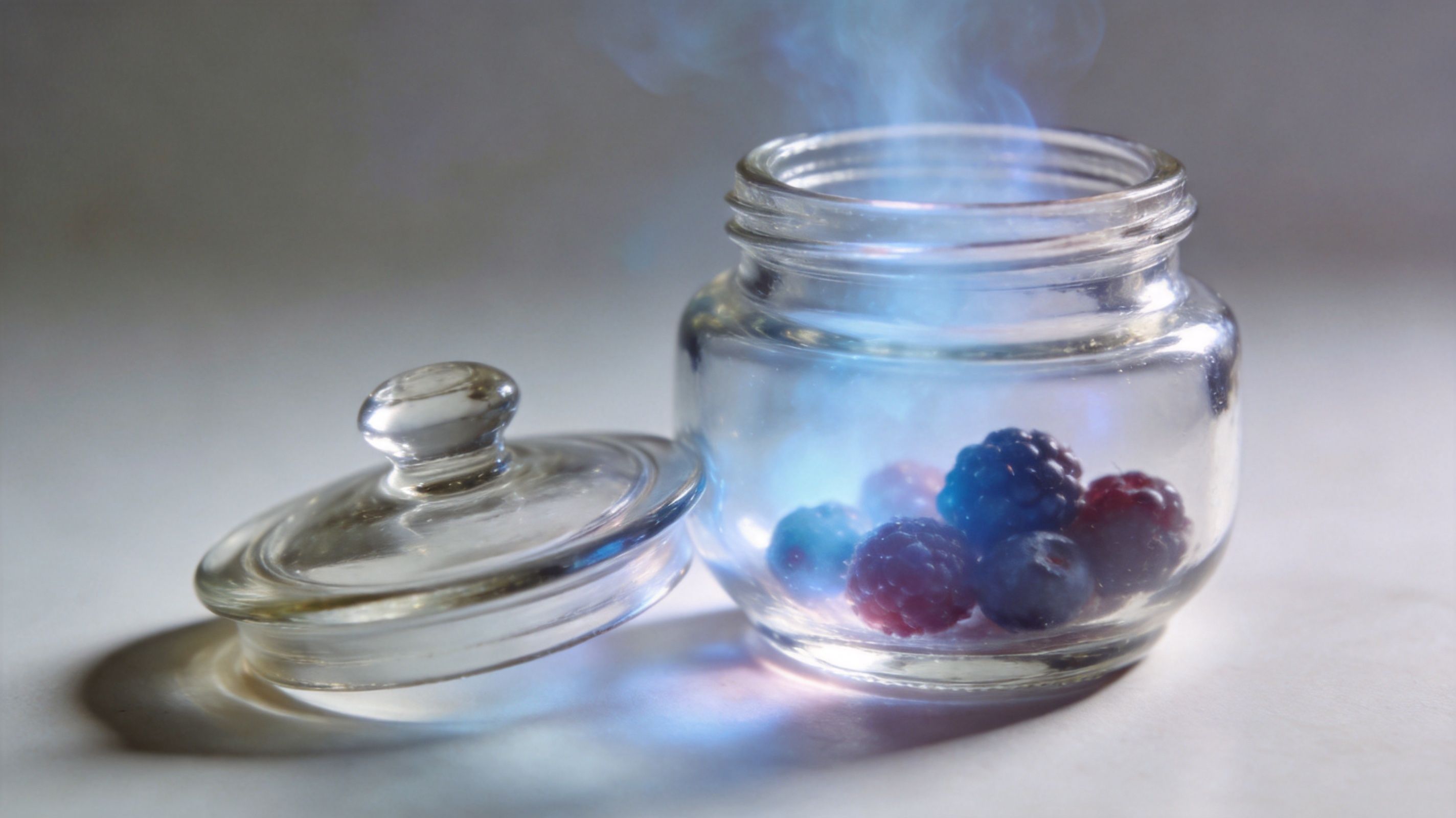
That scent profile is part of why Blue Dream is so approachable. Even patients who don’t love loud, funky flower often respond well to a cleaner berry-forward nose. It smells familiar. Fruit, light earth, a little spice, and sometimes a crisp edge that feels almost outdoorsy.
What your nose is picking up
Leafly’s Blue Dream profile notes dominant terpenes including myrcene, pinene, and caryophyllene in this strain’s aromatic makeup, which helps explain the blend of fruit, freshness, and spice many patients notice in the jar and on the exhale. If you want a quick primer on why those compounds matter, this guide on what terpenes in weed do and how to spot them is worth reading.
Here’s the practical version:
- Myrcene often reads as earthy, musky, or ripe fruit. In Blue Dream, this is part of what rounds out the berry sweetness so it doesn’t taste like candy.
- Pinene brings a sharper, cleaner note. Think pine needles or fresh air after rain. It can make the whole profile feel more awake.
- Caryophyllene adds a peppery, slightly warm edge. It keeps the flavor from becoming flat or overly fruity.
How flavor translates during use
Blue Dream usually tastes close to how it smells when it’s well grown and properly cured. The inhale often leans sweet and soft. The exhale may show more of the herbal, piney, or peppery side.
That matters because flavor often sets expectations before effects arrive. A syrupy, dessert-heavy strain often signals a very different ride than something bright and berry-forward with a clean finish. Blue Dream’s flavor tends to support its identity as a balanced, daytime-friendly hybrid rather than a heavy knockout strain.
A quick visual walkthrough helps if you’re trying to match aroma to real flower characteristics:
What to look for when a batch is good
When someone hands you Blue Dream and all you get is dry hay, harsh smoke, or a vague sweetness with no depth, that’s usually not Blue Dream at its best. Better batches tend to show a more distinct nose and cleaner flavor separation.
A simple jar check helps:
| What you notice | What it can mean |
|---|---|
| Clear berry sweetness | The batch likely preserved the strain’s signature profile |
| Fresh pine or herbal lift | The profile may feel more lively and balanced |
| Gentle peppery finish | Caryophyllene is showing through |
| Flat, dusty smell | Age, poor cure, or weak terpene retention |
| Harsh smoke with little flavor | Quality may be lacking, even if THC looks high |
Blue Dream is one of those strains where the aroma tells the truth early. If the smell feels dull, the experience often will too.
Expected Effects and Medical Benefits
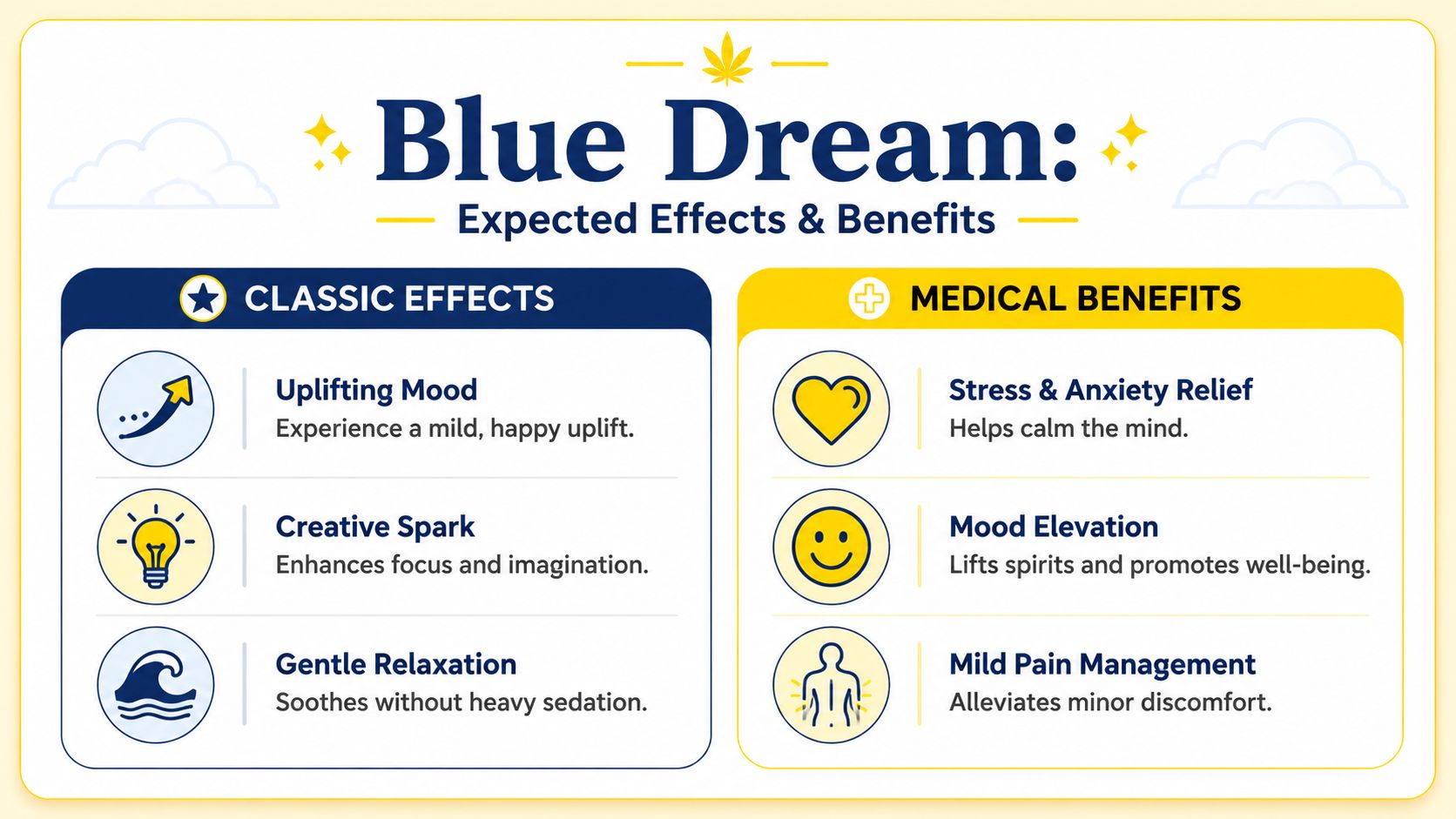
Blue Dream’s signature is a biphasic effect. In plain terms, it often starts in the head and then settles into the body. According to AllBud’s Blue Dream profile, its Haze side contributes cerebral stimulation while its Blueberry side contributes fuller-body analgesia. The same source says aggregated user reviews show 85% report pain relief and 75% report mood elevation.
How the experience usually unfolds
For many patients, Blue Dream doesn’t hit like a hammer. It tends to arrive with a mental shift first. Thoughts may feel a bit lighter. Mood can lift. Mundane tasks may feel less irritating. Then the body side starts to show up as tension eases and movement feels less stiff or uncomfortable.
That pattern is why Blue Dream often works well for people who want relief without losing function. It can support activity instead of replacing it.
Practical rule: If your goal is “feel better and still do things,” Blue Dream usually makes more sense than a strain known for strong sedation.
Good use cases for daytime and early evening
Blue Dream often fits well when the plan still includes being present. Think less “end the night” and more “improve the next few hours.”
Examples that tend to line up with this strain:
- Creative work: brainstorming, journaling, sketching, music, or any task where you want your mind a little looser but not scattered
- Routine tasks: laundry, meal prep, errands, cleaning, and catching up on low-stakes admin
- Social ease: hanging out with friends, attending a casual event, or taking the edge off before conversation
- Body comfort: mild to moderate physical tension, especially when you don’t want a strain that glues you to the couch
That said, “uplifting” doesn’t always mean energizing in the same way coffee is energizing. For some people, Blue Dream feels mentally brighter but physically calm. That distinction matters. It’s more accurate to call it functional relief than stimulation for its own sake.
Where it can help medically
The medical appeal is straightforward. Patients often look to Blue Dream for stress, anxiety, mood support, and pain management. The reason it remains so common in patient conversations is that those issues often overlap. Someone dealing with physical discomfort may also be carrying irritability, low mood, poor sleep momentum, or social tension.
Blue Dream can be useful when the goal isn’t just one symptom. It’s often chosen when the patient wants a broader sense of ease.
A practical way to consider this:
| Goal | Why Blue Dream may fit |
|---|---|
| Daytime pain support | It may ease discomfort without feeling overly sedating |
| Mood reset | Many people notice a more positive mental tone |
| Stress reduction | It often softens mental tension without feeling too heavy |
| Mild evening transition | It can help you downshift without forcing immediate sleep |
If sleep is the only target, Blue Dream may not be the most direct choice for every patient. A heavier nighttime option may be more efficient. For a broader look at matching symptoms to product type, this guide on choosing cannabis for sleep, pain, and anxiety is a strong next read.
What doesn’t work as well
Blue Dream isn’t the best fit when someone wants maximum sedation from the first inhale. It also may not be ideal for patients who are very sensitive to mentally active strains. Even balanced flower can feel a little too head-forward if your tolerance is low or your setting is already stressful.
If you’re anxious before consuming, take less than you think you need. Blue Dream is often friendly, but too much can still feel busy.
The sweet spot with this strain is moderate use, clear intent, and choosing the right format for the time of day.
Understanding Blue Dream Potency and Lab Data
A lot of people shop Blue Dream by THC alone. That’s an easy mistake. Potency matters, but it doesn’t tell the whole story.
Leafly’s strain page notes that Blue Dream commonly tests in the 17% to 24% THC range, with premium samples capable of reaching over 30% THCA, and it also describes the cultivar as a high-yield, resilient strain that helps support consistent availability for patients in legal markets on Leafly’s Blue Dream overview. For a patient, the main takeaway is simple. Blue Dream can show up as moderate or very strong depending on the batch.
How to read the label without overthinking it
If you’re looking at a menu or package, start with these three checkpoints:
THC or THCA range
A lower-testing batch may be a better fit if you want a clearer, more manageable daytime experience. A stronger batch may suit someone with more tolerance or someone prioritizing deeper relief.CBD presence
Blue Dream is generally known for low CBD. So if you’re hoping for a naturally CBD-rich experience, this probably isn’t the strain to rely on for that.Terpene information if available
If the terpene profile is listed, it can help explain why one Blue Dream batch feels brighter and another feels more relaxing.
A practical way to choose between batches
Think about your goal before you think about the highest number.
- For errands, focus, and light mood support: a batch at the gentler end of the common range may be easier to work with.
- For stronger body discomfort or a more pronounced effect: a batch at the higher end may make more sense.
- For brand-new patients: the “strongest available” option is rarely the smartest first buy.
The best Blue Dream for you isn’t automatically the one with the biggest THC number. It’s the one that matches what you need to do after you use it.
What a good lab report helps you avoid
Lab data helps you avoid two common problems. The first is buying flower that’s stronger than you can comfortably handle. The second is buying something that looks impressive on the label but won’t give the experience you want.
For Blue Dream, the smart move is to read the numbers as guidance, not as a scoreboard. Potency tells you how much respect to give the dose. The rest of the experience still comes down to format, terpene expression, and your own tolerance.
Dosing Tips and Consumption Formats for New Patients
Blue Dream is friendly to a lot of people, but that doesn’t mean you should treat it casually. The best results usually come from a start low, go slow approach. That’s especially true if you’re new, returning after a break, or trying a stronger batch than usual.
The format changes the experience just as much as the strain does. Silver Stem’s Blue Dream review notes that vaping tends to preserve terpenes for a quicker cerebral uplift, while in edible form the strain’s myrcene-heavy profile may feel more sedating and can catch new users off guard in the evening on Silver Stem’s Blue Dream format discussion.
Flower, vape, and pre-rolls in real use
Flower is usually the easiest place to learn Blue Dream. You can take one inhalation, wait, and decide whether you need more. That gives you room to find your personal sweet spot without overcommitting.
Vapes are often better when you want speed and discretion. If the day is busy and you want a quicker shift in mood or mental tension, a vape can make sense. The trade-off is that it’s easy to keep puffing because the format is so convenient.
Pre-rolls are simple, familiar, and social, but they can also encourage overuse if you feel like you need to finish the whole thing in one session. You don’t. A few pulls, then a pause, is a smarter move for most new patients.
For a broader comparison of timing, feel, and control, this breakdown of edibles vs vapes vs flower helps clarify the trade-offs.
Simple starter advice that actually works
Try this approach the first time:
- With flower: take one inhalation. Wait and check in with yourself before taking another.
- With a vape: take one short puff, then stop for a bit. Don’t stack multiple pulls because you “don’t feel it yet” after a minute.
- With a pre-roll: treat it like shared flower, not a single-serving obligation. Two or three pulls may be plenty.
If your goal is daytime productivity, less is usually better. You want enough to feel the mood shift and body ease, but not so much that your thoughts become too floaty. If your goal is evening relaxation, you may have a little more room, but the same patience still applies.
What to watch out for
The usual beginner mistake is chasing the first pleasant effect too aggressively. Blue Dream can feel smooth at first, which makes some people think they should keep going. Then the mental side gets louder than they wanted.
A better approach:
- Hydrate early: dry mouth is common with many THC-forward products
- Pick the right setting: first tries go better when you don’t have pressure, errands, or a crowded social environment
- Eat something light first if needed: some patients feel steadier that way
- Pause before redosing: if you already feel a mild shift, let it develop
A good first Blue Dream session should feel controlled. If you’re guessing whether you took too much, you probably did.
Choosing by lifestyle, not hype
If you commute, value discretion, or need fast adjustment, a vape often fits best. If you enjoy ritual and control, flower is hard to beat. If you want convenience and don’t want to grind or pack anything, a pre-roll is the easiest entry point.
Edibles deserve extra caution. Even when the strain name is familiar, the edible version may not feel like the flower version you expected. For Blue Dream, that difference can be especially noticeable later in the day.
Find Blue Dream Today at Mr. Nice Guys DC
When you’re ready to buy, the easiest path is to decide your format first and your potency second. That keeps the process practical. If your day-to-day routine matters most, choose the product style that fits how you consume.

A simple way to order well
Start with the menu and look for Blue Dream in the format you’re most likely to use consistently. Many patients do best when they keep it simple.
- Premium flower works well if you want control over each session.
- Pre-rolls make sense if you want convenience with familiar strain effects.
- Vape cartridges are a strong fit for patients who want a faster, more discreet option.
If you want a sense of what else is typically available alongside Blue Dream, this guide to what strains Mr. Nice Guys DC carries gives a useful overview of the broader menu.
What to check before you place the order
Look at the product name carefully. Confirm the format. Read the potency details. If terpene or lab information is listed, use it. If the product is intended for daytime use, don’t default to the strongest option just because it sounds like a better value.
Patients also make better choices when they buy for the moment they have in mind:
| Situation | Best starting format |
|---|---|
| Quiet evening at home | Flower or pre-roll |
| Busy day and need discretion | Vape |
| First time with the strain | Flower or a few pulls from a pre-roll |
Pickup or delivery
Once you’ve chosen the right product, the rest is straightforward. Patients can place an order, choose pickup, curbside, or delivery, and keep the process simple and discreet. That matters when you know what you want and don’t want to overcomplicate the purchase.
Blue Dream stays popular because it solves a real need. It gives patients one familiar option that often works across mood support, body comfort, and everyday functionality. When a strain earns that kind of repeat trust, it usually stays in rotation for a reason.
If you want help choosing the right Blue Dream format for your routine, Mr. Nice Guys DC makes it easy to browse premium flower, pre-rolls, and vapes with pickup, curbside, and discreet delivery options. If you’re not sure where to start, ask for guidance based on your goal, daytime focus, evening relaxation, or balanced symptom relief.
Mr Nice Guys DC
At Mr. Nice Guys DC, we’re more than just a cannabis delivery service — we’re passionate advocates for quality, convenience, and community. With years of experience in the cannabis industry, our team is dedicated to educating and empowering customers across Washington, D.C. Whether you're a seasoned user or just starting your cannabis journey, our blog delivers trusted tips, product insights, and the latest updates from the world of weed. Stay informed, stay elevated.
