
Must Be 21 To Enter
By entering this site you are agreeing that you are at least 21 Years of Age or older.
I AM 21 OR OLDERThe Best Weed for Insomnia: A DC Resident's Guide
.svg)

.png)
If you're hunting for the best weed for insomnia, you might hear a simple answer: find strains high in THC and CBN with terpenes like Myrcene. But honestly, the real secret isn't finding one magic strain. It's about figuring out which mix of these compounds clicks with your body and tackles your specific sleep problems.
Your Guide to Finding Better Sleep with Cannabis
Staring at the ceiling at 3 AM is a special kind of torture. When counting sheep is a lost cause and prescription meds feel like too big a leap, a lot of people in DC are turning to cannabis as a more natural option. Since an estimated 30% of people struggle with insomnia symptoms, finding real relief is a huge priority for many.
This guide is here to cut through the noise. We'll give you clear, practical advice on how to use cannabis to finally get a good night's sleep.
Finding the right cannabis product for sleep is a personal journey. What knocks one person out might leave another feeling wired or anxious. That’s because the plant’s effects come from a complex dance of different compounds, not just the old-school "Indica vs. Sativa" labels.
Understanding the Basics of Cannabis for Sleep
Think of a cannabis strain like a unique recipe. The main ingredients are cannabinoids (like THC and CBD) and terpenes (the aromatic oils). The exact amounts and mix of these ingredients cook up the final effect.
- Cannabinoids: These are the big players. THC is well-known for its sedative punch, while CBD can help quiet the anxiety that might be keeping you up.
- Terpenes: These aromatic compounds do way more than just give cannabis its signature smell—they shape the experience. Terpenes like Myrcene, Linalool, and Caryophyllene are famous for their relaxing and sleepy vibes.
Here's a quick cheat sheet to keep the main players straight.
Quick Guide to Sleep-Inducing Cannabis Compounds
This table breaks down the primary cannabis compounds known to help with sleep and what they're best for.
By focusing on these profiles instead of just a strain name, you can make a much smarter choice. For example, if anxiety about a big work presentation is what's keeping you awake, a product with a good balance of THC and CBD might work better than something that's pure THC. You can dive deeper into how to choose the right product for your needs in our detailed guide.
The best way to start is by figuring out the root cause of your insomnia. Do you have trouble falling asleep, or is staying asleep the bigger problem? Answering that question will help you zero in on the right product and cannabinoid profile.
Here at Mr. Nice Guys DC, our mission is to give you the knowledge you need. We truly believe that understanding why certain products work for sleep is the first step toward finding consistent relief. We’ll walk you through the science, the strains, and the strategies to help you build a better bedtime routine, one peaceful night at a time.
How Cannabis Works as a Natural Sleep Aid
To get why cannabis can be such a game-changer for insomnia, we need to talk about a brilliant piece of biological machinery you have: the endocannabinoid system (ECS). Think of it as your body’s internal balancing act. It’s always running in the background, keeping things like your mood, appetite, and—most importantly for us—your sleep-wake cycle in check.
Your body creates its own cannabinoids (called endocannabinoids) to communicate with this system. But when you’re tossing and turning all night, it’s a good sign the ECS is a little out of whack. This is where cannabis steps in. Cannabinoids from the plant, like THC and CBD, can supplement your body's natural supply, helping nudge that system back into balance and get your sleep schedule back on track.

THC and CBD: Your Sleep Support Team
The two most well-known cannabinoids, THC and CBD, are like a specialized support team for your sleep. They each have different jobs but work together beautifully to tackle insomnia from multiple angles.
THC (Tetrahydrocannabinol): The Sedative
THC is the compound responsible for the classic cannabis "high," but it's also a powerful sedative. It connects with CB1 receptors in your brain, which gives it a direct line to influencing your sleep patterns.
- Helps You Fall Asleep Faster: THC is known to shorten the time it takes to drift off. For example, instead of lying awake for an hour, you might find yourself dozing off in 15-20 minutes.
- Boosts Deep Sleep: Some studies suggest it can increase the amount of time you spend in slow-wave sleep, which is the really restorative, deep-sleep stage.
- Eases Pain: If aches and pains from an old sports injury are what’s keeping you up, THC’s pain-relieving properties can make all the difference.
CBD (Cannabidiol): The Calming Agent
CBD doesn't produce a high and takes a more indirect approach. Instead of binding strongly to receptors, it helps your ECS operate more smoothly. Its main superpower for sleep is calming the things that cause restlessness in the first place.
- Quiets an Anxious Mind: For so many people, a racing mind is the biggest barrier to sleep. CBD is fantastic at dialing down that anxiety, turning a frantic mental to-do list into quiet background noise.
- Relaxes Your Body: By easing stress and muscle tension, CBD gets your body physically ready for rest. It can feel like the tension in your shoulders and neck is finally melting away.
These two often create the best results when used together. If you want to get deeper into what makes them unique, check out our guide on the differences between CBD vs THC.
Scientific Backing for Cannabis and Insomnia
Using cannabis for sleep isn't just word-of-mouth wisdom anymore. A solid body of scientific research is piling up, giving it real credibility as an alternative to traditional sleep medications that often come with a laundry list of side effects.
Recent clinical studies have shown impressive results. A landmark UK trial, for instance, found that patients using cannabis-based medicines reported sustained improvements in their sleep quality over 18 months. In another study, about 60% of participants no longer fit the clinical definition of insomnia after only two weeks on a THC/CBD oil. Better yet, their midnight melatonin levels—a key hormone for healthy sleep—shot up by 30%, while the placebo group's actually dropped.
This kind of scientific proof is a big deal. It confirms that the right cannabis product doesn't just knock you out—it can work with your body’s own systems to genuinely improve your sleep quality and restore a healthy, natural rhythm.
Once you understand how these compounds interact with your body, you can stop the guesswork. You can start making smart choices to find the best weed for insomnia that hits your specific issues, paving the way for more peaceful, restorative nights.
Decoding Cannabinoids and Terpenes for Sleep
To find the right cannabis for a good night's rest, you'll need to look past the old Indica vs. Sativa labels and become a bit of a detective. The real secrets to sleep are hidden inside the plant’s chemical profile—specifically, its cannabinoids and terpenes. Think of these compounds as the individual ingredients in a sleep-inducing recipe. The right combination is what makes all the difference.
Getting to know these key players helps you analyze any strain and make a much better guess about how it will affect you. This knowledge turns shopping from a game of chance into a targeted strategy, helping you and the budtenders at Mr. Nice Guys DC find your perfect match for a peaceful night.
The Major Cannabinoids for Sleep
Cannabinoids are the main active compounds in cannabis that work with your body’s endocannabinoid system to create different effects. While there are over 100 of them, three are especially important when you're trying to beat insomnia.
THC (Tetrahydrocannabinol) The Heavy Lifter
THC is the most famous cannabinoid, known for its psychoactive effects. When it comes to sleep, its real power is in its sedative properties. A lot of people find that THC helps them fall asleep faster by quieting all the mental and physical chatter. It’s a solid choice if your sleepless nights are caused by pain or restlessness.
CBD (Cannabidiol) The Anxiety Soother
CBD is non-psychoactive and works a bit differently. Instead of knocking you out directly, it often targets the root causes of sleeplessness, like anxiety and stress. If a racing mind is what’s keeping you up, a product with a good dose of CBD can bring on a sense of calm that lets sleep happen naturally. This is why balanced THC/CBD ratios are so popular.
CBN (Cannabinol) The Sleepy Specialist
Often called the "sleepy cannabinoid," CBN is quickly gaining a reputation as a powerful sedative. It actually forms when THC ages and breaks down, which is why older cannabis sometimes feels more sedating. While research is still catching up, early findings suggest CBN is great at helping people stay asleep through the night.
Recent clinical trials are finally confirming what many users have felt for years. A 2023 study showed that 20 mg of CBN was effective at improving sleep, significantly cutting down on nighttime awakenings. In some cases, objective sleep quality shot up by as much as 80% compared to a placebo.
The makeup of a product really matters. Evidence shows that formulations with a mix of cannabinoids—like those combining THC, CBD, and CBN—are often more effective than products with just one isolated compound. You can read the full research on how CBN impacts sleep to see the data for yourself.
Meet the Terpenes: The Aromatic Directors
If cannabinoids are the lead actors, think of terpenes as the directors shaping the entire experience. These aromatic compounds are behind the distinct smells of cannabis—from earthy and piney to citrusy and floral—but they do a lot more than just smell good. They work together with cannabinoids to create more nuanced effects.
This teamwork is often called the "entourage effect." Learning how these compounds play off each other is a huge part of picking the right product. You can dive deeper into this idea in our article about what full-spectrum cannabis means. When you’re hunting for the best weed for insomnia, keep an eye out for strains rich in these specific terpenes.
Myrcene: This is the most common terpene in cannabis and is famous for its sedating, muscle-relaxing effects. It has an earthy, musky scent, kind of like cloves or mangoes. Strains high in Myrcene are usually your best bet for that classic "couch-lock" feeling that eases you into a deep sleep. For a practical example, think of the strain Granddaddy Purple.
Linalool: Found in lavender as well as cannabis, Linalool is a powerhouse for relaxation. It has a floral, slightly spicy aroma and is known for its serious anti-anxiety and calming properties. If stress is what’s messing with your sleep, a strain rich in Linalool can help quiet your mind. A good example is the strain Do-Si-Dos.
Caryophyllene: With a spicy, peppery smell like black pepper or cinnamon, Caryophyllene is unique because it also acts like a cannabinoid. It’s great for dialing down stress and pain, making it a go-to for anyone kept awake by physical discomfort or anxiety. The popular strain GSC (formerly Girl Scout Cookies) is a classic example.
By learning to spot these key cannabinoids and terpenes, you can decode a strain's potential before you even try it. Instead of just asking for an "Indica," you can ask for something with THC, CBN, and plenty of Myrcene and Linalool—a much more precise way to find your perfect nightcap.
Choosing the Right Product for Your Sleep Needs
Knowing which cannabinoids and terpenes to hunt for is a great first step. Now, let’s get into the next critical piece of the puzzle: how you actually consume your cannabis. The method you pick is just as important as the strain, because it directly controls two key factors for sleep: how quickly the effects kick in (onset time) and how long they stick around (duration).
Finding the best weed for insomnia often boils down to matching the product's performance to your specific sleep problem. Do you have trouble shutting your brain off to fall asleep, or is your main issue waking up at 3 AM and staring at the ceiling? The answer will point you toward the ideal way to consume.
To help you find the right path, this decision tree can guide you toward a general profile that might suit your needs, whether you're looking to feel sleepy, calm, or just relaxed.
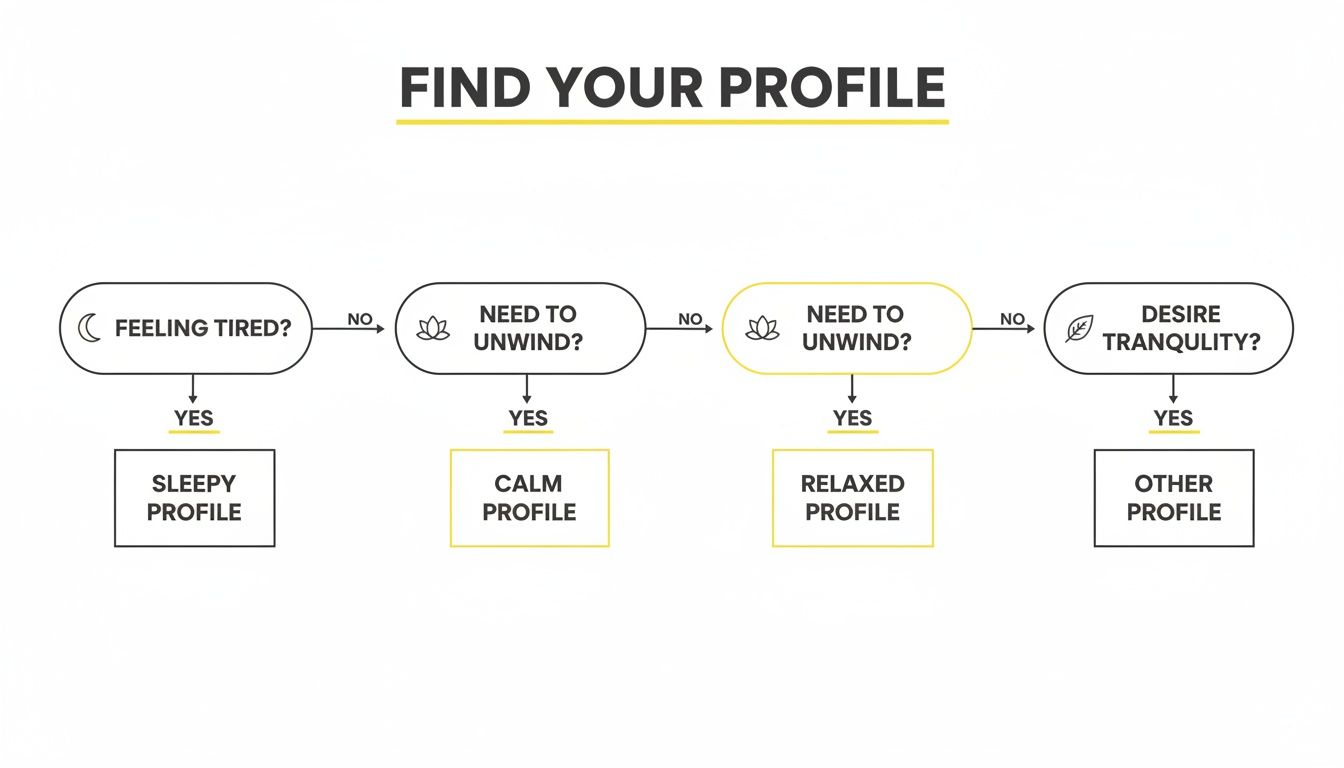
As you can see, your personal goals—whether it's direct sedation, calming anxiety, or simple relaxation—are the best place to start when narrowing down your options.
Inhalation Methods: Vaping and Smoking
Inhalation, whether you’re vaping or smoking flower, is the fastest way to feel the effects of cannabis. When you inhale, cannabinoids are absorbed directly into your bloodstream through your lungs, delivering relief in just a few minutes.
This rapid onset makes inhalation a fantastic choice if your main challenge is falling asleep. If your mind starts racing the second your head hits the pillow, the nearly instant calming effects can be a total game-changer. For a practical example, taking a puff or two from a vape pen right before you brush your teeth can have you feeling sleepy by the time you're ready for bed.
The trade-off for this speed, however, is a shorter duration. The effects of inhaled cannabis usually peak within 30 minutes and start to fade within 2 to 3 hours. This means it might not be enough to carry you through the entire night.
Ingestible Methods: Edibles and Tinctures
Ingestible products like edibles (think gummies or chocolates) and tinctures (oils placed under the tongue) offer a completely different experience. Because they have to pass through your digestive system, the effects take a lot longer to show up—usually somewhere between 30 to 90 minutes.
But that slow, methodical release is their superpower. The effects of an edible can last for 6 to 8 hours or even longer, providing sustained relief that lasts all night. This makes them the perfect solution if your problem is staying asleep.
If you consistently wake up in the middle of the night, a long-lasting edible taken an hour before bed can act like a time-release capsule, helping you maintain a deep, uninterrupted slumber until morning. For example, eating a 5mg gummy after dinner can ensure its effects are peaking right when you typically wake up around 2 or 3 AM.
It's absolutely crucial to be patient with edibles. A common rookie mistake is taking a second dose because you don't feel anything right away, which can lead to an uncomfortably intense experience later on. For a more detailed breakdown, you can learn more about the differences between edibles, vapes, and flower in our dedicated guide.
Comparing Your Options Side by Side
To make the choice even clearer, let's put these methods head-to-head. Think about your nightly routine and where you need the most support.
Cannabis Consumption Methods for Sleep Compared
Ultimately, choosing the right product is all about self-awareness. By understanding your specific sleep patterns and how different delivery methods work, you can create a personalized strategy that actually works for you.
You might even find that a combination works best—using a vape for immediate relief at bedtime and a low-dose edible to carry you through the night. This kind of tailored approach puts you in control, helping you finally achieve the consistent, restorative sleep you deserve.
Top Strains for Insomnia Available in DC
Alright, we’ve covered the science. Now, let’s get practical and talk about what you can actually find on the shelf. This is your go-to shopping guide for specific strains that have a solid reputation for helping people sleep. While our menu at Mr. Nice Guys DC is always rotating to keep things fresh, these are the classics that pop up often because they just plain work.
We'll connect the dots between their cannabinoid and terpene profiles and why they're such a good pick for insomnia. This way, you can see all that science in action when you’re looking at real products.
Classic Strains for Deep Relaxation
Some strains are legendary for a reason—they consistently knock you back with deeply relaxing, sedative effects. If you're looking to combat sleeplessness, these are fantastic starting points.
Granddaddy Purple (GDP)
You can't talk about sleep strains without mentioning Granddaddy Purple. This indica icon is famous for its powerful body-relaxing effects. It's almost always packed with the terpene Myrcene, which is the compound directly linked to that heavy, couch-locked feeling that helps you drift off.
- Profile: Think sweet, like grapes and berries.
- Why it Works: The one-two punch of moderate THC and a heavy dose of Myrcene soothes both your mind and body. It's perfect if you deal with physical restlessness or a brain that just won't shut up at bedtime.
Northern Lights
Another heavyweight in the indica world, Northern Lights is renowned for its tranquilizing effects. It’s a favorite for folks looking for relief from pain, anxiety, and, you guessed it, insomnia. Its terpene profile usually features a calming blend of Myrcene and Caryophyllene.
- Profile: Has a spicy, earthy, and pine-like flavor.
- Why it Works: This strain feels like being wrapped in a warm, weighted blanket. It eases you into a state of peace that’s absolutely perfect for sleep.
Balanced Options for Calming the Mind
Sometimes, the issue isn't needing pure sedation. It's about quieting the anxiety that’s keeping you awake in the first place. Strains with a more balanced profile can work wonders without feeling overwhelmingly heavy.
Bubba Kush
Known for its gentle, tranquilizing effects, Bubba Kush is an amazing choice for unwinding after a long day. It often has a rich mix of terpenes like Caryophyllene and Limonene, which are great for melting away stress without knocking you out cold.
- Profile: A unique coffee and chocolate aroma with some earthiness.
- Why it Works: Bubba Kush delivers a happy, relaxed feeling that quiets all that mental chatter. This makes it a great pick if your insomnia is fueled by stress, letting sleep come more naturally.
OG Kush
While technically a hybrid, OG Kush leans heavily toward relaxation for most people. Its complex terpene profile, often featuring Linalool, Myrcene, and Caryophyllene, gives it some serious stress-busting power.
- Profile: A complex smell of fuel, skunk, and spice.
- Why it Works: OG Kush is incredible at relieving stress and creating a euphoric sense of calm. That mental lift can be exactly what you need to break the cycle of anxious thoughts that keep you staring at the ceiling.
Remember, a strain's name is just a starting point. Its real power comes from its entire chemical profile. If you can, always check the lab-tested cannabinoid and terpene data to make the best choice.
Your Best Resource: The Budtender
Cannabis menus are always changing, with new and exciting strains popping up all the time. The strains above are common, but the best thing you can do is just talk to the knowledgeable staff at Mr. Nice Guys DC. For a sneak peek at what might be on the menu, you can always check out some of the top flower strains at Mr. Nice Guys DC.
Tell them what you’ve learned here. For example, say, "I have trouble staying asleep and my mind races. I think I need something with Linalool and maybe some CBN." This gives them the info they need to be your personal guide to a better night’s rest.
Got Questions About Cannabis and Sleep? We’ve Got Answers.
It’s totally normal to have a few questions when you’re thinking about trying something new for your health. Using cannabis to get better sleep is a personal journey, and getting some clear, honest answers can make you feel a lot more confident heading in.
This section tackles the most common things people wonder about when looking for the best weed for insomnia. We'll get into the practical stuff, like how to avoid feeling foggy the next day and figuring out the perfect time to take your dose, so you can dial in your approach for the best night's sleep.
Will I Feel Groggy the Next Day?
This is easily one of the biggest worries—the dreaded "weed hangover." And yeah, it can happen, especially if you go for a high-THC strain or just take a bit more than your body is used to. You might wake up feeling sluggish, with a headache or some serious dry mouth.
To dodge this, the golden rule is “start low and go slow.” Seriously. For example, if you bought 10mg gummies, cut one in half (or even a quarter) for your first night. See how you feel, then you can decide if you need more the next time. Only increase it bit by bit over a few nights until you find your sweet spot. Choosing strains with a decent amount of CBD can also be a game-changer, since CBD can help balance out some of THC’s less-fun next-day effects.
And here’s a simple but clutch tip: drink a big glass of water before you hit the hay. It makes a surprising amount of difference.
If you’re consistently waking up in a fog, that’s your body telling you to switch things up. Try a smaller dose, take it a little earlier in the evening, or swap to a strain with a different terpene profile that isn’t quite so heavy. Our budtenders can point you toward something that promotes rest without the morning-after brain fog.
Can I Become Dependent on It for Sleep?
Like anything you use to help you doze off, there’s a chance for psychological dependence—where you start feeling like you can’t sleep without it. While cannabis has a much lower risk of physical dependence than many prescription sleep meds, it’s still smart to be mindful of your habits.
To keep from making it a crutch, try using cannabis only on nights you really need the help, instead of making it a nightly ritual just because. For example, maybe you only use it on Sunday nights when you're anxious about the work week, or during particularly stressful periods. Taking a "tolerance break" for a few days or a week here and there is also a great move.
This helps reset your system and keeps cannabis as a tool to regulate your sleep cycle, not a permanent fixture. If you ever feel concerned about your use, it's always a good idea to chat with a healthcare professional.
What's the Best Time to Take Cannabis Before Bed?
The perfect timing really comes down to how you’re consuming it. The time it takes to feel the effects varies wildly between methods.
Here’s a simple breakdown to help you time it right:
- Vaping or Smoking: These hit fast. You’ll feel the effects in just a few minutes, so the best time to use them is about 15-30 minutes before you want to be lights out. This is perfect for people who have a hard time just falling asleep. A good practical approach is to take a puff while you're getting ready for bed.
- Edibles and Tinctures: These guys take their sweet time. An edible has to work its way through your digestive system, so you’ll want to take it a good 60-90 minutes before you plan to be asleep. A great example is taking it right after you finish dinner, giving it plenty of time to kick in by bedtime.
A little trial and error is your friend here. Start with these timeframes and just listen to your body. You might discover that taking an edible a full two hours before bed is your magic window. Nailing down the timing is a simple tweak that can perfect your whole routine.
Is Indica Always Better Than Sativa for Sleep?
That old saying, "Indica for in-da-couch," is catchy, but it’s a massive oversimplification. What really determines a strain's effect is its entire chemical profile—all the cannabinoids and terpenes working together in what’s called the entourage effect.
Some Sativa strains loaded with calming terpenes like Linalool can be incredible for sleep, especially if your insomnia stems from anxiety. For example, a Sativa like Jack Herer, which is high in the terpene terpinolene, can sometimes quiet a racing mind better than a heavy Indica. On the flip side, some Indicas just might not have the sedative punch you’re looking for.
It's way more helpful to look at the terpene profile instead of just the Indica or Sativa label. When you're on the hunt for the best weed for insomnia, look for strains rich in:
- Myrcene for its classic relaxing and sedating vibes.
- Linalool for its floral scent and anti-anxiety properties.
- Caryophyllene for its spicy notes and stress-busting benefits.
These are the real indicators of a sleepy-time strain. The crew at Mr. Nice Guys DC can guide you to specific products based on their lab-tested profiles, which is a much more reliable way to find what will actually work for you.
Ready to explore your options and find the perfect product for a better night's sleep? The knowledgeable team at Mr. Nice Guys DC is here to guide you. Check out our curated menu for delivery or pickup and start your journey to more restful nights.
Mr Nice Guys DC
At Mr. Nice Guys DC, we’re more than just a cannabis delivery service — we’re passionate advocates for quality, convenience, and community. With years of experience in the cannabis industry, our team is dedicated to educating and empowering customers across Washington, D.C. Whether you're a seasoned user or just starting your cannabis journey, our blog delivers trusted tips, product insights, and the latest updates from the world of weed. Stay informed, stay elevated.
