
Must Be 21 To Enter
By entering this site you are agreeing that you are at least 21 Years of Age or older.
I AM 21 OR OLDERFinding Calm With Weed Strains for Anxiety
.svg)

.png)
If you're looking for the right weed strain to manage anxiety, you're taking a solid first step toward finding some peace. The right kind of cannabis, especially strains with a good balance of cannabinoids and the right terpenes, can genuinely help quiet those racing thoughts and take the edge off. But here's the key: not all strains are created equal. What works wonders for one person might not be the best fit for you, and it all comes down to your own body and what your anxiety feels like.

Navigating Cannabis as a Tool for Anxiety Relief
Feeling overwhelmed is part of being human, so it’s no surprise people are turning to cannabis for a more natural way to find calm. The idea that plants can help dial down that constant buzz of anxiety isn't new, but we’re finally getting the science to back it up. For a lot of folks, cannabis is that much-needed step back from the ledge—a tool that brings on a sense of relaxation that’s otherwise hard to come by. For example, someone who feels a constant, low-level hum of social anxiety might find that a specific strain helps them engage in conversations without overthinking every word.
Think of this guide as your roadmap. We’ll walk you through how to choose the right weed strains for anxiety, making it all feel straightforward. Let's start with the basics to get you comfortable making smart choices for your own wellness.
Why Strain Selection Is a Big Deal for Anxiety
Just grabbing any random product off the shelf is a gamble. You’re not likely to get the results you’re hoping for. It’s the specific chemical compounds inside each strain—cannabinoids like THC and CBD, plus those aromatic terpenes—that really dictate the effects. One strain might sharpen your focus but accidentally crank up your anxiety, while another could wrap you in a blanket of calm.
Here's what you need to keep in mind:
- Cannabinoid Ratios: The dance between THC (the part that gets you high) and CBD (the non-intoxicating, calming compound) is everything. High-THC, low-CBD strains can sometimes make anxiety worse. On the flip side, CBD-heavy options often bring relief without an intense "high." A practical example is choosing a strain with a 1:1 THC to CBD ratio to ease into the evening, rather than a high-THC strain that might keep your mind racing.
- Terpene Profiles: Ever wonder why some strains smell like pine and others like lavender? That's terpenes. These aromatic oils don't just create the scent; they also shape the experience. Terpenes like linalool and myrcene are famous for their chill-out properties.
- Your Own Biology: Everyone’s internal endocannabinoid system is unique. A strain that your friend swears by might not hit the same for you. This is why a little personal trial and error is a normal—and necessary—part of the journey.
The evidence for this approach is stacking up, too. A clinical study from Washington State University that tracked over 5,000 medical cannabis sessions found something pretty incredible: 93% of users felt a real drop in anxiety symptoms, with the average symptom reduction hitting 58%. This isn't just wishful thinking; it's data.
When you understand how these different pieces work together, you can start picking products with way more confidence. To go even deeper, check out our guide on choosing the right cannabis products for sleep, pain, and anxiety. Getting this knowledge down is the first real step toward finding relief that actually works for you.
How Cannabis Actually Works With Your Body’s Stress System
To get why certain weed strains can chill you out, you have to look at your body's built-in stress-management network. It's called the endocannabinoid system (ECS), and it's basically a series of dimmer switches controlling your mood, sleep, appetite, and, you guessed it, stress.
Think of the ECS as your body’s master regulator, always trying to keep things balanced—a state called homeostasis. When you’re stressed or anxious, it’s like some of those dimmer switches are cranked way too high. You feel on edge, overwhelmed, and just can't relax. The goal is to gently dial them back down.
This is where cannabis steps in. The compounds in the plant, called cannabinoids, are a near-perfect match for the compounds your own body makes (endocannabinoids). Because they're so similar, they can talk directly to your ECS, giving you a way to manually adjust those dimmer switches yourself.
Cannabinoids: Your Anxiety Control Knobs
The two cannabinoids everyone knows, THC and CBD, interact with your ECS in totally different ways, especially when it comes to anxiety.
CBD (Cannabidiol): Picture CBD as a gentle, steadying hand on that dimmer switch. It doesn't force it down; instead, it helps your body's own system work better. It stops the breakdown of anandamide, an endocannabinoid people call the "bliss molecule," helping it stick around longer to keep you calm and dial down fear. A great practical example is using a CBD-rich tincture in the morning to keep that low-level, background anxiety in check all day without feeling high.
THC (Tetrahydrocannabionol): THC is way more direct. It binds straight to the receptors in your brain, capable of yanking that anxiety switch down fast and bringing on serious relaxation and even euphoria. For someone hit with a sudden wave of panic before a big presentation, a small, controlled dose of THC can be a lifesaver. But—and this is a big but—the dose is everything. Too much THC can flip the script, cranking the switch up and triggering paranoia or making anxiety worse.
The key takeaway is that CBD offers a subtle, background calm by supporting your body’s natural rhythm, while THC provides a more immediate, powerful effect that you have to manage carefully.
Terpenes: The Aromatic Calming Crew
It's not just about cannabinoids. Cannabis is also packed with aromatic oils called terpenes. These are the compounds that give a strain its unique smell and taste—from that citrusy punch of a lemon to the soothing scent of lavender. But they do way more than just smell good; they have a huge say in how a strain makes you feel.
Think of terpenes as another set of controls, fine-tuning what THC and CBD do.
- For instance, the terpene Linalool, which you'll also find in lavender, is famous for its relaxing, anti-anxiety vibes. A practical example is choosing a strain high in linalool before bed to help quiet a racing mind, much like you'd use lavender essential oil for the same purpose.
- Another big one is Myrcene. It has a classic earthy smell and is linked to those heavy, "couch-lock" sedative effects. It can seriously amp up the relaxing side of THC, making it perfect for night-time use when you need to completely shut down and get a restful sleep.
Choosing the right weed for anxiety isn’t just about hunting down high THC or CBD percentages. It’s about understanding how all these different compounds play together. A strain with moderate THC but a ton of calming terpenes like linalool and myrcene could be way more effective for your anxiety than a THC powerhouse that's missing them. This synergy is what makes finding the right strain such a personal—and effective—journey.
Understanding THC, CBD, and The Entourage Effect
When you're trying to find the right weed strain for anxiety, the conversation always comes back to two key players: THC and CBD. These compounds are the heavy hitters that shape a strain’s effects, but the way they interact with anxiety is way more complex than most people think. Getting a solid grip on how they work alone—and more importantly, together—is what separates a random guess from a smart, effective choice.
Think of it like a delicate dance between these two cannabinoids. Each has its own moves, but it’s how they work together that creates the final performance. Once you understand their individual strengths and how they sync up, you can start picking strains that actually bring you relief.
The Two Sides of THC
Tetrahydrocannabinol, better known as THC, is the celebrity of the cannabis world. It’s the compound responsible for that classic euphoric "high." But when it comes to anxiety, THC is a perfect example of "less is more." Scientists call its relationship with anxiety biphasic, which is just a fancy way of saying it can have opposite effects depending on how much you take.
It’s a lot like coffee. One small cup in the morning might feel focusing and calm. But down a whole pot, and you’ll probably be dealing with jitters, a racing heart, and a dose of paranoia. THC works the exact same way.
- Low Doses: A little bit of THC can kick off a dopamine release, making you feel relaxed and at ease. For someone with racing thoughts, this can be a game-changer. A perfect real-world example is taking a single, small puff from a low-THC vape pen to take the edge off when panic starts to creep in.
- High Doses: Too much THC can overstimulate the amygdala—the brain’s fear and threat center. This is exactly why some super-potent strains can backfire and actually cause anxiety or paranoia, especially if you're already wired that way.
For anyone trying to manage anxiety, the goal is to find a strain with a modest THC level. You want to stay in that therapeutic sweet spot without accidentally tipping the scales into discomfort.
CBD: The Great Balancer
Cannabidiol, or CBD, is THC’s non-intoxicating partner. It’s earned a massive reputation for its calming effects and its uncanny ability to smooth out THC’s more intense edges. Just think of CBD as the great balancer, working behind the scenes to bring a sense of equilibrium without getting you high.
CBD’s approach to the body’s stress response system is more subtle than THC’s. It doesn’t grab onto cannabinoid receptors with the same force. Instead, it gently influences them, helping to regulate your mood and dial down the physical symptoms of anxiety.
CBD is an awesome starting point for anyone new to using cannabis for anxiety. Since it’s non-psychoactive, it offers a gentle calmness that can help with daily stress without getting in the way of your day-to-day life.
A lot of people use a high-CBD tincture every day to keep a steady baseline of calm. Others go for a strain with a 1:1 ratio of THC to CBD, getting the best of both worlds while keeping THC-fueled anxiety spikes at bay. For example, using a 1:1 edible before a crowded event can provide gentle relaxation without the intense high that might make social situations more difficult.
The Entourage Effect: Teamwork Makes the Dream Work
Okay, this is where it all clicks. While THC and CBD are the main event, they aren’t working alone. The cannabis plant is packed with hundreds of compounds, including other minor cannabinoids and aromatic terpenes, that all collaborate to create a strain's specific effects. This beautiful synergy is what we call the entourage effect.
The easiest way to wrap your head around it is to think of a band.
- THC is the lead singer: It’s powerful, gets most of the attention, and drives the main vibe.
- CBD is the bassist: It lays down a steady, grounding rhythm that keeps the lead singer’s intensity in check and prevents the whole song from getting too chaotic.
- Terpenes are the drummer and keyboardist: They add all the depth, personality, and nuance that shape the song’s overall mood.
A product with just isolated THC is like hearing a singer acapella. It can be strong, sure, but it’s missing the richness and complexity of the full band. A full-spectrum product, on the other hand, gives you that complete experience, which is often far more effective for anxiety. This is why two strains with the exact same THC percentage can feel worlds apart—their unique "band" of supporting compounds creates a totally different show.
Discovering Terpenes: The Secret to Calming Strains
Ever wondered why some strains leave you feeling perfectly chill while others, with the same THC level, just don't hit the same? The answer almost always comes down to terpenes. These are the aromatic oils that give cannabis its signature scents—from pine and earth to citrus and sweet berries. But they're doing way more than just smelling good; they are the secret architects behind a strain's unique vibe.
Think of terpenes like the essential oils in aromatherapy. It’s no coincidence that the same compound that makes lavender so famously relaxing, Linalool, is also found in some of the most calming cannabis strains. Terpenes work alongside cannabinoids like THC and CBD to steer the entire experience. It's a powerful synergy that experts call the entourage effect.
This infographic breaks down how THC, CBD, and terpenes team up inside the plant.
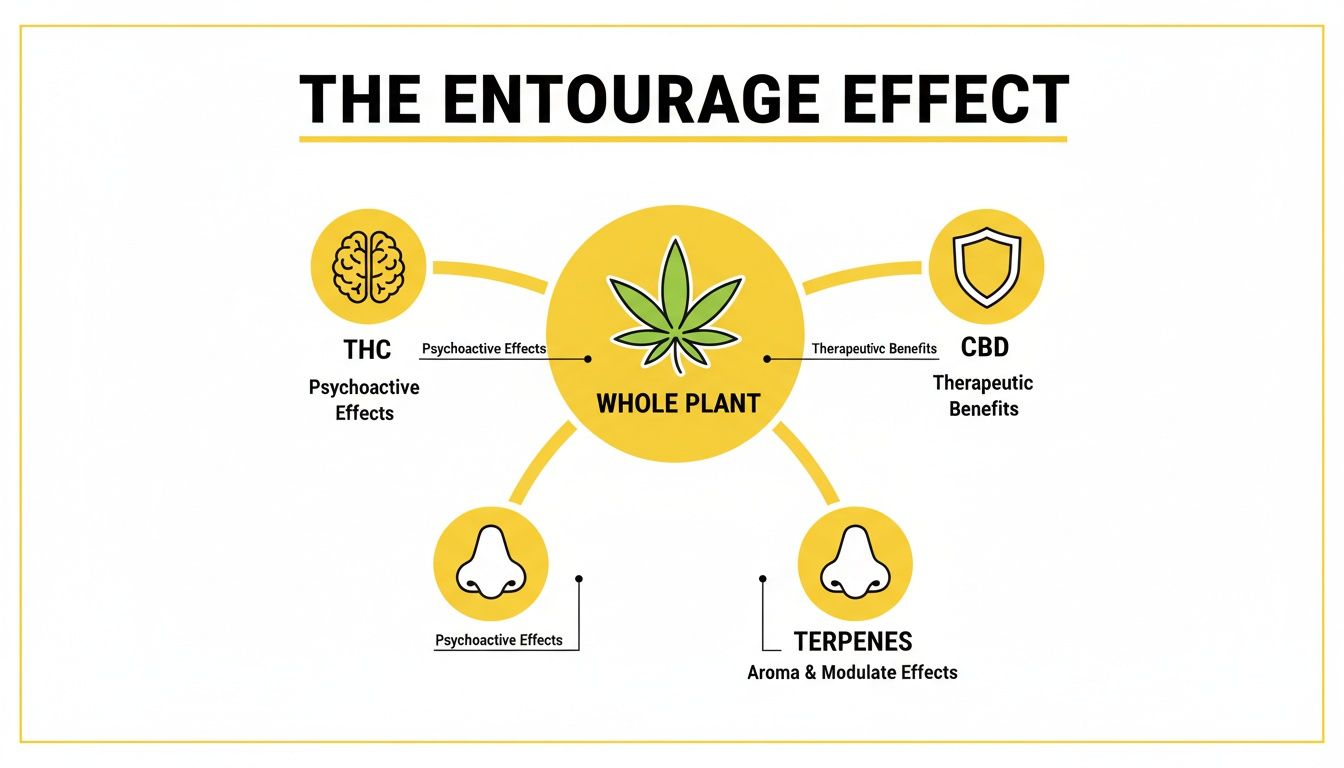
It’s a great visual reminder that focusing only on THC gives you just a tiny piece of the puzzle.
The Most Important Terpenes for Anxiety
When you're hunting for a strain to help with anxiety, knowing which terpenes to look for can be a game-changer. Forget fixating on THC percentage. Learning to read a strain’s terpene profile is how you find truly effective and tailored relief. It’s like picking the right tea—you grab chamomile to relax, not black tea to wind down.
Let's get to know the key players famous for their anti-anxiety properties.
Myrcene: This is the most common terpene in modern cannabis, giving off an earthy, musky scent kind of like cloves. Myrcene is celebrated for its sedative qualities and its knack for promoting deep physical relaxation. It's a go-to for anyone whose anxiety shows up as physical tension or sleepless nights. A practical example is choosing a myrcene-heavy strain to use after a long, stressful workday to help your tight shoulders and clenched jaw finally relax.
Linalool: With a floral, lavender-heavy aroma, Linalool is probably the most well-known terpene for stress relief. It’s been used for centuries in traditional medicine to calm a racing mind, and it brings that same energy to cannabis. If you have trouble shutting your brain off at night, a strain high in linalool could be your best friend.
Caryophyllene: Found in black pepper and cinnamon, Caryophyllene has a distinct spicy, woody smell. What makes it so unique is that it's the only terpene that also acts like a cannabinoid. It binds directly to CB2 receptors in your body to help soothe anxiety and inflammation, all without any psychoactive buzz. This makes it a great choice for reducing anxiety-related stomach issues or inflammation.
While these three are heavy hitters, they don't work alone. To get a better sense of how they contribute to the overall feel of different plant types, check out our guide on the difference between Indica and Sativa.
How to Use Terpene Profiles to Your Advantage
So, how do you put this knowledge to work? Next time you’re checking out a strain's lab results, scan the list for these specific terpenes. A strain high in both myrcene and linalool is almost guaranteed to be more relaxing than one dominated by an energizing terpene like limonene, even if their THC levels are identical.
By looking past the big THC and CBD numbers and focusing on the terpene profile, you can predict how a strain will actually make you feel. This is the key to finding consistent, reliable relief from anxiety.
To help you get started, here’s a quick rundown of what to look for when you're exploring different strains for anxiety.
Top Anti-Anxiety Terpenes and Their Effects
This table breaks down the key terpenes known for their calming and stress-reducing effects, making it easier to spot them on a menu.
Armed with this knowledge, you're no longer just a passive buyer—you're an informed one. You can start having smarter conversations with budtenders, asking for specific terpene blends to target your anxiety more precisely. It's the ultimate way to personalize your cannabis experience and find what truly works for you.
Top Weed Strains Recommended for Anxiety Relief
Now that we have a handle on how cannabinoids and terpenes work their magic together, we can get into the good stuff—specific strains that people consistently turn to for anxiety relief. This isn't a prescription, but think of it as a well-researched starting point, giving you some solid examples to bring up with a budtender. The whole idea is to find a strain whose chemical makeup clicks with your personal needs for calm.
Consider this your shortlist of reliable candidates. Each one has built a reputation for easing stress, but they all do it a little differently based on their unique blend of compounds. By looking at why they work, you can make a much more informed choice.
Indica-Dominant Strains for Deep Relaxation
Indicas are often the first stop for anxiety because they tend to deliver a powerful body high, which is great for quieting both a racing mind and physical tension. People often describe the effect as being wrapped in a comforting, weighted blanket that just melts away the stress. This makes them perfect for evenings or whenever you just need to completely check out and unwind.
A classic example is Granddaddy Purple. This legendary strain is packed with the terpene myrcene, which is known for its heavy sedative qualities. When you combine that with a moderate THC level, you get a profound sense of physical ease that can wash away a tough day. Someone might use this strain to combat the "Sunday scaries" and ensure a good night's sleep before the work week begins.
Another heavy hitter is Bubba Kush. This one is so well-loved for its calming effects that it consistently tops user surveys. In one poll of 260 users, a whopping 20.1% of people named Bubba Kush as the best strain for their anxiety, putting it at the very top of the list for self-reported relief. You can dig into the details of these user preferences and strain effectiveness findings if you're curious.
CBD-Dominant Strains for Clear-Headed Calm
For anyone who needs anxiety relief without the head high, CBD-dominant strains are a game-changer. These varieties offer a gentle, clear-headed relaxation that's perfect for daytime use when you need to stay sharp and functional. They work by helping to balance your system without the risk of THC-induced paranoia that some people experience.
The undisputed champion in this category is ACDC. It boasts a CBD-to-THC ratio that can hit as high as 20:1. This unique profile lets you tap into significant anxiety reduction and mental clarity with zero impairment, making it a go-to for managing stress during work or social events. A practical application would be using ACDC before a networking event to feel more at ease without feeling intoxicated.
Think of CBD-dominant strains like ACDC as your all-day support system. They don’t offer a big, immediate escape. Instead, they provide a steady, background calm that helps you handle daily stressors with a more balanced mindset.
Finding Your Perfect Match
At the end of the day, the best weed strains for anxiety are the ones that work for your body and your specific symptoms. The recommendations here are based on tons of user feedback and well-known chemical profiles, but your own experience is the final word. To get an idea of what might be available, you can check out our guide on what strains Mr. Nice Guys DC carries.
Use this info as your foundation. Start with a strain that sounds like it fits your needs—whether it’s the deep chill of Bubba Kush or the clear-headed calm of ACDC—and just pay attention to how you feel. Finding the right strain is a personal journey, and these examples are here to help you take those first steps.
How to Dose Cannabis for Anxiety Safely
Once you’ve zeroed in on a few promising weed strains for anxiety, the next make-or-break step is dialing in the right dose. Getting this part right is just as important as the strain itself—it’s the difference between gentle relief and an experience that cranks your anxiety up instead of down.
The golden rule, especially when you're trying to calm your mind, is to start low and go slow.

This whole approach is about finding your personal sweet spot—the smallest amount you need to actually feel better. It’s the best way to sidestep the paradox where too much THC actually makes anxiety worse. Think of it like salting your food; you can always add more, but you can't take it back out.
The Start Low and Go Slow Method
This isn't some complicated scientific process. It’s a simple, effective way to stay in control. You start with a tiny amount, give your body time to respond, and only increase the dose if you genuinely feel you need to.
For example, if you're using a vape pen or a pre-roll, take a single, small puff. Then, put it down. Wait a solid 15-20 minutes to see how you feel before even thinking about taking another hit. For edibles, it's even more crucial. Start with a microdose of 2.5 mg of THC or less—like cutting a 10mg gummy into four pieces—and wait at least two full hours. Seriously. The slow onset can trick you into thinking it's not working, which is the most common mistake people make.
Your ideal dose is 100% unique to you. It depends on your body chemistry, your tolerance, and the specific product in your hand. There's no magic number, which is why a patient, cautious approach is so critical for managing anxiety.
Comparing Consumption Methods for Anxiety
How you consume cannabis completely changes the game. It affects how quickly you feel it, how long it lasts, and how easily you can control the dose. Different situations call for different methods.
- Inhalation (Smoking & Vaping): This is your fast track to relief, with effects kicking in within minutes. That immediate feedback is perfect for handling a sudden wave of anxiety or a panic attack because you can adjust your dose in real time. A practical example is taking one or two puffs from a vaporizer to take the edge off right when you feel anxiety building before a stressful phone call.
- Edibles & Tinctures: These are the long-game players. They’re discreet, smoke-free, and the effects can last for 4-6 hours or more. This makes them great for steady, all-day relief. A common use case is taking a low-dose edible in the morning to help manage general anxiety throughout a busy workday without needing to step away to re-dose. The catch? The onset is delayed, anywhere from 30 minutes to 2 hours, so you have to plan ahead to avoid accidentally overdoing it.
Tips for a Positive First Experience
Your environment and your mindset—your "set and setting"—are huge, especially when you’re just starting out. To make sure your first few times are genuinely helpful, you need to create a supportive space.
Pick a place where you feel safe, comfortable, and won't be interrupted. Your own living room with some calming music and low lighting is perfect. It’s also a great idea to have a trusted friend with you, or at least on standby via text. Just knowing someone is there for you can provide a ton of peace of mind while you figure out what works for you.
Your Questions About Cannabis and Anxiety, Answered
Stepping into the world of cannabis to manage anxiety can bring up a lot of questions. It's completely normal. Let's clear the air and tackle some of the most common concerns people have, so you can move forward feeling confident and informed.
Can Cannabis Actually Make My Anxiety Worse?
Honestly, yes, it can. Some cannabis strains, especially those that are super high in THC and have very little CBD, can sometimes ramp up anxiety or even trigger a bit of paranoia. For instance, using a potent Sativa strain before bed might lead to racing thoughts instead of relaxation.
This is what’s known as a biphasic effect—a fancy way of saying that a small dose might chill you out, but a large dose could do the exact opposite. The key is to stick to the golden rule: "start low and go slow." Try strains with a more balanced THC-to-CBD ratio, or even ones that are CBD-dominant. CBD is known to soften THC's sharper edges, which can make for a much smoother experience.
What's the Best Way to Use Cannabis for Anxiety?
This really boils down to what you need and how fast you need it. There’s no single "best" way; it's all about matching the method to the moment.
- For fast-acting relief: If you're in the middle of a panic moment or feeling overwhelmed, inhalation (like vaping or smoking) is your quickest path to calm. You'll feel the effects within minutes, which also makes it easier to control your dose on the fly. A practical example is using a vape for immediate relief after a stressful meeting.
- For long-lasting, steady support: To keep a handle on general anxiety throughout the day, edibles or tinctures are fantastic. The effects are more of a slow burn, lasting for several hours. A good example is taking a low-dose edible in the morning to help keep things on an even keel all day long. Just be patient—they can take up to two hours to kick in, so careful dosing is key.
How Do I Figure Out Which Strain Is Right for Me?
Finding your perfect strain is a bit of a personal journey, but you don't have to go in blind. It's less about the catchy strain name and more about what's actually in it.
The secret is to look past the marketing and get familiar with the plant's chemical profile. Check out the cannabinoid percentages (how much THC and CBD) and the main terpenes listed on the lab report.
For anxiety, you'll want to look for strains that are rich in calming terpenes like linalool, myrcene, and caryophyllene. A practical approach is to keep a simple journal. Note the strain, the terpenes, your dose, and how you felt. Over time, you'll see a pattern emerge that points you to your ideal profile. A strain with moderate THC but a killer terpene profile is often way more effective than something that just boasts a sky-high THC number.
Will I Feel High if I'm Using Cannabis for Anxiety?
Not if you don't want to. While high-THC strains will definitely give you that classic psychoactive "high," there are plenty of other roads to relief.
CBD-dominant strains are amazing for providing a sense of calm without any intoxication. This makes them perfect for daytime use when you need to stay sharp and focused. For example, many people use a CBD oil or a high-CBD vape pen during their workday to manage stress without any impairment. Even strains with a balanced 1:1 ratio of THC and CBD tend to offer a much milder, more manageable buzz compared to their THC-heavy cousins, giving you relief without sending you to the moon.
Figuring all this out can feel like a lot, but you're not in it alone. The crew at Mr. Nice Guys DC is here to help you connect the dots. We offer one-on-one consultations to help you find the perfect weed strains for your anxiety based on what you're looking for. Take a look at our curated menu and find your path to a calmer state of mind today. Swing by at https://www.mrniceguysdc.com.
Mr Nice Guys DC
At Mr. Nice Guys DC, we’re more than just a cannabis delivery service — we’re passionate advocates for quality, convenience, and community. With years of experience in the cannabis industry, our team is dedicated to educating and empowering customers across Washington, D.C. Whether you're a seasoned user or just starting your cannabis journey, our blog delivers trusted tips, product insights, and the latest updates from the world of weed. Stay informed, stay elevated.
