
Must Be 21 To Enter
By entering this site you are agreeing that you are at least 21 Years of Age or older.
I AM 21 OR OLDERDispensary Customer Experience: A DC Guide to Excellence
.svg)

.png)
You can usually tell when a dispensary is losing customers before the sales report confirms it. New visitors walk in unsure of what to ask. The check-in feels stiff. The menu on the screen doesn't match what's available. The budtender is friendly but rushed, so the recommendation stays generic. Checkout takes longer than it should. Nobody was rude, but nobody built confidence either.
That's the problem with dispensary customer experience. Customers rarely describe it as a systems issue. They describe it as a feeling. “I didn't love it.” “It felt confusing.” “I'll try somewhere else next time.”
In a market like DC, that's costly. Patients and adult consumers have options, and they remember how easy or difficult it was to buy from you. The operators who keep a loyal base don't treat service as soft skill theater. They build an experience that is clear, compliant, fast, informative, and repeatable.
At Mr. Nice Guys DC, that kind of experience shows up in practical ways. The menu is designed to help customers sort through flower, edibles, cartridges and pens, pre-rolls, concentrates, topicals, and tinctures without feeling lost. Delivery, curbside, and pickup give customers different ways to buy based on their situation. Staff guidance matters, but so do the operational details behind it.
What a Great Dispensary Customer Experience Feels Like
A weak dispensary visit feels transactional. You walk in, hand over your ID, wait without much direction, stare at product names that mean nothing to you, and end up buying whatever sounds familiar. You leave with a bag, but not much confidence.
A strong visit feels different from the first minute. The greeting is warm, but not forced. Check-in is organized. The menu is easy to read. The budtender doesn't dump jargon on you. They ask useful questions. Are you shopping for sleep support, daytime clarity, pain relief, stress reduction, or something discreet and simple to dose?
That's the difference between moving product and guiding a person.
The customer should feel oriented, not overwhelmed
At Mr. Nice Guys DC, the better model is boutique service with operational discipline. A first-time customer looking at Gelato, Blue Dream, Wedding Cake, Runtz, and OG Kush doesn't need a lecture. They need a quick explanation of how those options may differ in feel, format, and use case. Someone choosing between a tincture and a pre-roll needs clarity about onset, convenience, and control.
A good dispensary customer experience reduces friction at every touchpoint:
- At the door the customer knows what to expect
- On the menu product categories make sense
- In conversation the recommendation feels specific
- At checkout the process is quick and clean
- After the sale the customer knows what they bought and why
For patients and first-time shoppers, that kind of confidence matters as much as the product itself. It's one reason many people prefer the more guided, compliant retail environment described in this overview of dispensary shopping in DC.
Great service in cannabis retail isn't about saying more. It's about removing uncertainty.
When operators get that right, customers don't just complete a purchase. They relax. They trust the process. They come back with better questions next time.
Why Your Dispensary Customer Experience Matters
Customer experience matters because it decides whether your marketing spend turns into one sale or a real relationship. You can stock premium flower and carry popular formats all day, but if the first visit feels awkward or inconvenient, the customer may never give you a second chance.
That first visit carries more weight than many operators admit. First-time customer retention is a critical challenge, with industry practitioners commonly citing that 40–55% of new buyers fail to return within 30, 60, or 90 days of their initial visit, according to Cova's discussion of cannabis retention strategies. If your opening interaction is clumsy, you're not just losing one basket. You're losing future visits, future recommendations, and future trust.

The first visit sets the economic ceiling
A first-timer usually arrives with some uncertainty. They may not know the difference between a cartridge and a disposable pen. They may be curious about topicals but worried they won't work for their needs. They may want sleep support but don't know whether flower, edibles, or tinctures make more sense.
If the team responds with generic answers, the customer feels like they're shopping alone. If the team responds with calm, clear guidance, the customer feels taken care of. That difference shapes retention.
At Mr. Nice Guys DC, a practical example is how format choice gets handled. Instead of steering every customer toward the same fast-moving category, the better approach is to narrow the field. Someone who wants discretion during a workday may do better with a tincture or a pen than a pre-roll. Someone shopping for evening wind-down may want a different route entirely. The experience improves when the recommendation fits the person, not the shelf.
Experience is how dispensaries protect margin
Poor customer experience creates expensive problems:
- Bad expectations cause abandoned orders and disappointed pickups
- Slow service compresses throughput during busy periods
- Weak product guidance increases buyer hesitation
- Inconsistent checkouts make the store feel less professional
- Forgettable visits drive customers to compare on convenience alone
A lot of dispensaries think loyalty starts with discounts. It usually starts with trust. A customer who believes your menu is accurate, your staff is informed, and your process is easy doesn't need to be bribed back every time.
Operational truth: The cleanest path to repeat business is reducing confusion on visit one.
In DC, where customers may be comparing pickup, delivery, and in-store options across multiple providers, service quality becomes part of your brand identity. The stores that keep people don't only sell cannabis. They sell certainty.
The Core Components of Dispensary Customer Experience
Dispensary customer experience isn't one thing. It's a stack of systems and behaviors that the customer experiences as one visit. When one piece breaks, the whole visit feels weaker.
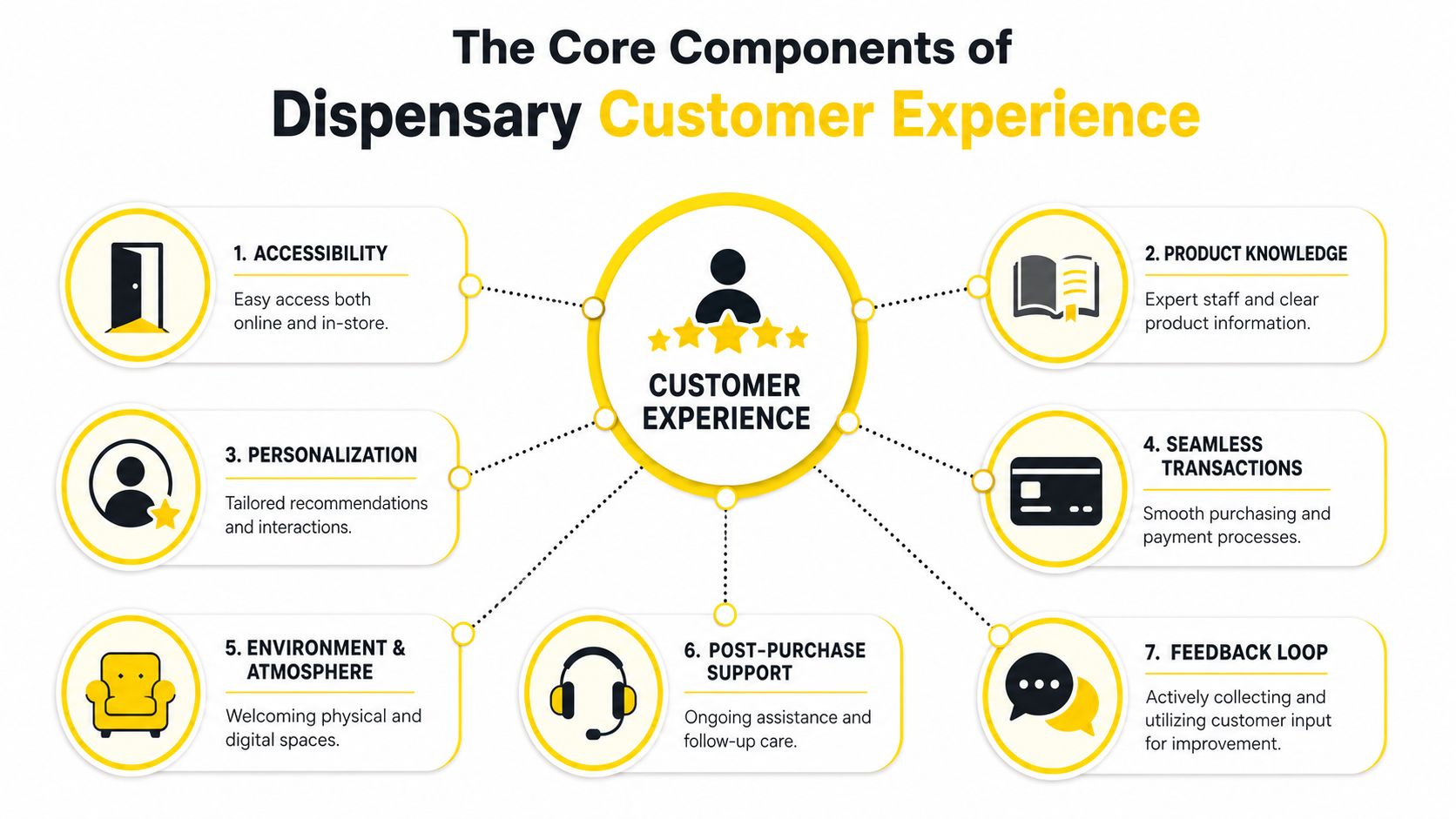
Accessibility
Customers should be able to reach you in the way they prefer. That means a clean online menu, clear ordering options, understandable store policies, and easy pickup or delivery instructions.
At Mr. Nice Guys DC, accessibility isn't just location. It's also category clarity. A customer browsing the available cannabis product categories at Mr. Nice Guys DC should quickly understand the difference between flower, edibles, concentrates, tinctures, and topicals.
Product knowledge
Budtenders don't need to perform mini-seminars. They do need to explain products in plain language. New customers are often deciding between form factors before they're deciding between strains.
A useful recommendation sounds like this: “If you want more dose control and a familiar routine, start with a low-and-slow edible plan. If you want faster feedback, a vaporizer may be easier to evaluate.” That's better than rattling off strain names with no context.
Personalization
Not every customer wants the same experience. First-timers usually need reassurance and orientation. Regulars often want speed, consistency, and maybe a quick note about something new in their preferred category.
That's where many stores miss. They give the same script to everyone. Strong operators adapt. A VIP doesn't want a long intake conversation every visit. A nervous first-timer shouldn't be rushed through one.
Seamless transactions
A sale can go sideways at the end even after a strong consultation. If pricing feels unclear, payment options feel limited, or checkout drags, the visit loses momentum.
Retail discipline matters. Menu accuracy, clearly posted policies, smooth handoff to the register, and staff who know how to close the sale without confusion all shape the customer's final impression.
The customer remembers the handoff points. Door to desk. Desk to budtender. Budtender to register.
Environment and atmosphere
The store should feel calm, organized, and easy to read. That doesn't mean sterile. It means intentional.
For a DC dispensary, that may look like an approachable U Street energy rather than a clinical or intimidating tone. Good atmosphere is practical. Lighting helps people read packaging. Signage reduces repetitive questions. Queue flow keeps people from crowding each other.
Post-purchase support
The visit shouldn't end at payment. Customers often need help after they get home. They may want to confirm dose timing, storage, expected effects, or what to try next if a format didn't fit.
A strong operation supports that with follow-up education, accessible staff, and useful content. Blog guides, product explainers, and clear communication extend the experience beyond the counter.
Feedback loop
The last pillar is what keeps the other six from getting stale. You need to hear where customers got confused, where they waited too long, what they couldn't find, and what they wish staff had explained better.
Here's a simple way to think about the seven pillars:
| Component | What good looks like in practice |
|---|---|
| Accessibility | Customers can browse, order, and arrive without guessing |
| Product knowledge | Staff explain formats and effects clearly |
| Personalization | Recommendations fit the customer's goals and experience level |
| Seamless transactions | Checkout is quick, accurate, and predictable |
| Environment and atmosphere | The space feels welcoming and organized |
| Post-purchase support | Customers know what to do after they leave |
| Feedback loop | Management collects input and acts on it |
None of these pillars works alone. A beautiful store can't rescue a bad menu. Friendly staff can't fully overcome a sloppy checkout. Real loyalty comes from consistency across all seven.
Mastering the Digital Dispensary Experience
For many customers, the dispensary visit starts on a phone, not at the front door. They search the menu, compare formats, check whether delivery reaches their neighborhood, and decide whether ordering will be easy or annoying. By the time they arrive, they've already formed an opinion about your operation.
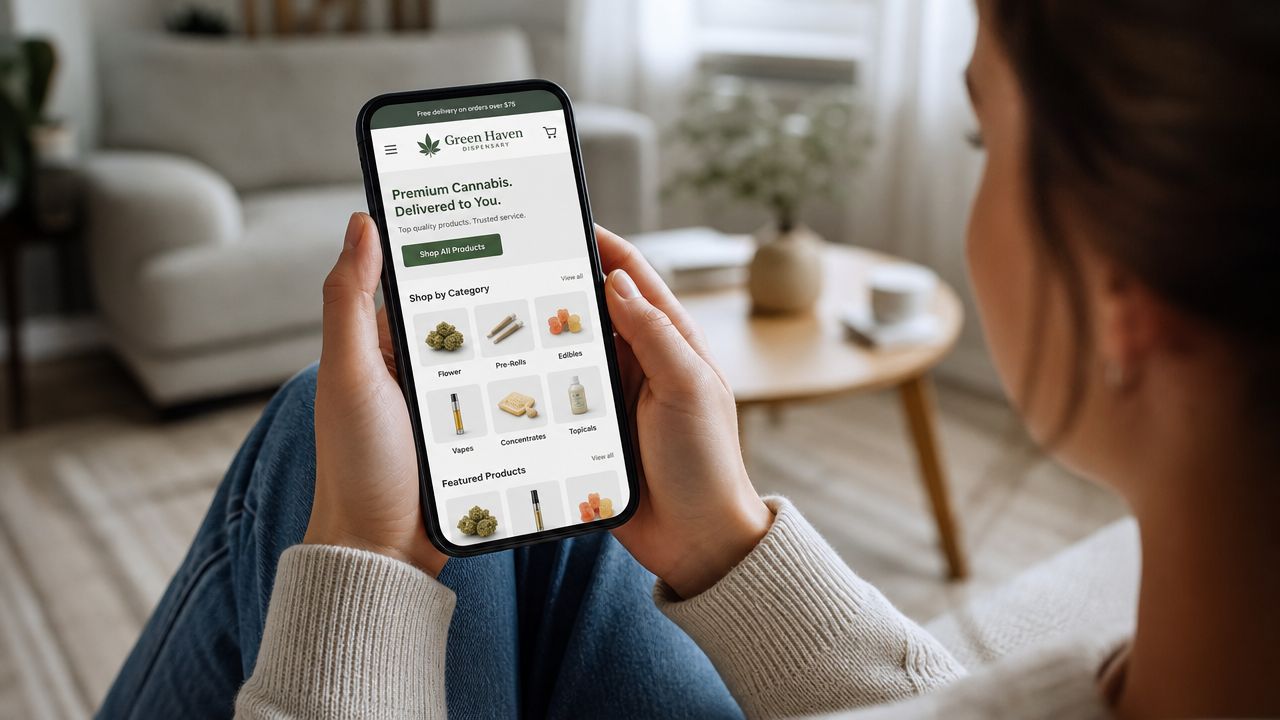
Digital channels now drive a large share of dispensary business. According to Swell's cannabis marketplace statistics roundup, 25–30% of all dispensary sales originate from online orders, and dispensaries that accept debit cards see transactions averaging $13 higher than cash purchases and process 59% more transactions overall.
Your menu is part of your service model
A bad online menu creates the same feeling as a bad in-store interaction. The customer has to work too hard. Categories are messy. Product details are thin. Availability is uncertain. Ordering feels like a gamble.
A better digital experience does a few things well:
- Shows current availability so customers don't build an order around missing products
- Makes categories obvious so shoppers can filter by flower, edibles, vapes, pre-rolls, concentrates, topicals, or tinctures
- Answers common questions about pickup, delivery, and payment before the customer has to ask
- Works cleanly on mobile because that's where many orders begin
In practice, this matters a lot for delivery-heavy operations. Customers in Alexandria, Bethesda, Rockville, and Silver Spring don't just want access. They want confidence that the order they place is the order that shows up.
A straightforward online workflow like this guide to ordering weed online helps remove hesitation before the sale ever reaches staff.
Digital trust depends on operational accuracy
The mistake some operators make is treating e-commerce like a marketing layer. It isn't. It's a live retail environment. If your menu says a cartridge is available and the team has to call the customer later to swap it, the digital experience failed.
That's why fulfillment discipline matters more than flashy design. Accurate menus, clear windows for pickup or delivery, and realistic payment expectations do more for loyalty than oversized banners and promo graphics.
A short demonstration of online ordering can help clarify what customers expect from a smooth path to purchase:
Convenience has to feel dependable
Digital convenience only works when it's dependable. Pickup should be simple. Delivery should feel organized. Payment shouldn't become a surprise at the end.
One practical option in this category is Mr. Nice Guys DC, which offers in-store pickup, curbside, and delivery powered by Sweede for customers who want different fulfillment choices. That's useful because customer preference changes by situation. Someone may browse from home one day and need curbside the next.
The stores that win online don't just offer digital ordering. They make it feel safe to rely on.
How to Measure Your Dispensary Customer Experience
If you can't measure the experience, you'll end up managing by anecdote. One manager thinks the team is doing great because customers seem friendly. Another thinks service is slipping because a few people complained that week. Neither view is enough.
The useful approach is to track a small set of operational signals that reveal where the experience is working and where it's breaking.
Start with inventory truth
A lot of customer frustration begins with stock accuracy. If the menu doesn't reflect what sold a few minutes ago, the customer pays for that mistake with wasted time.
According to Dimensional Insight's discussion of recent sales data in cannabis retail, dispensaries should use recent sales data to power POS systems and online menus so inventory stays accurate in real time. That accuracy helps minimize transaction time and supports customer trust that advertised products are available.
Shop floor rule: If the menu lies, every downstream metric gets worse.
Use KPIs that reveal friction
Not every metric is a customer experience metric. Some tell you revenue. Some tell you volume. The ones below help you diagnose whether customers are getting a smooth, credible visit.
| KPI | What It Measures | Why It Matters |
|---|---|---|
| Repeat visit rate | How often customers come back after an initial purchase | Shows whether the experience was strong enough to earn another visit |
| Time per transaction | How long the sale takes from active service to completion | Long times usually point to process confusion, menu issues, or staff friction |
| Average transaction value | The average size of completed purchases | Helps reveal whether staff recommendations are relevant and confidently delivered |
| Order fulfillment accuracy | Whether online or pickup orders match what was promised | Protects trust and reduces disappointment at handoff |
| Payment mix | How customers choose to pay | Shows whether your payment options support convenience or create friction |
| Customer feedback themes | The recurring comments in surveys, texts, emails, and reviews | Reveals operational pain points that sales data alone can't show |
Review by customer type, not just store total
Averages can hide real problems. New visitors, returning regulars, and heavy repeat buyers don't behave the same way. If you only look at overall store performance, you'll miss the fact that first-timers may be confused while regulars are perfectly happy.
A practical review rhythm is simple:
- Check retention by lifecycle segment so you can separate visit-two behavior from long-term regular behavior.
- Review transaction speed by time block to catch bottlenecks during rush periods.
- Compare menu complaints to fulfillment errors because those usually connect.
- Read feedback weekly and tie it to specific policy or training changes.
The point isn't to drown in dashboards. It's to identify friction early enough to fix it.
Actionable Steps to Improve Your Customer Experience
Improvement usually comes from a handful of disciplined changes, not one giant reinvention. If I were tightening dispensary customer experience this week, I'd focus on the moves that reduce confusion fast and are easy for staff to repeat consistently.
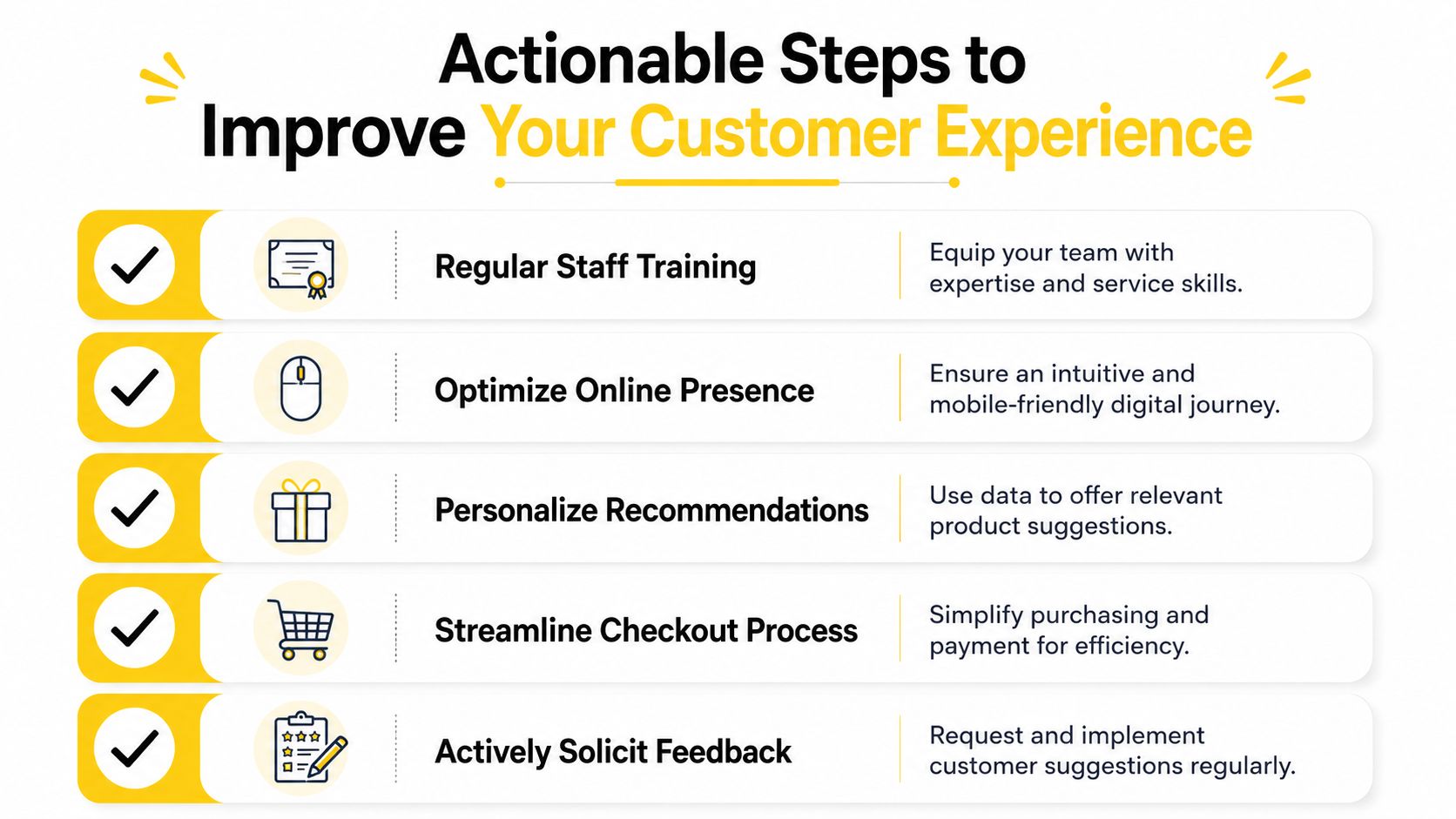
Fix the first three minutes
The opening matters more than most stores admit. Train staff to greet clearly, explain the flow in one sentence, and identify whether the customer is new, returning, or in a hurry.
That changes the whole conversation. A first-timer needs orientation. A regular may only need confirmation that their preferred category is in stock. One script won't serve both.
Clean up the menu before retraining the staff
Operators often jump straight to coaching budtenders when the bigger issue is menu clutter. If your categories are messy, naming is inconsistent, or product details are thin, staff are forced to rescue the sale manually.
Start by tightening the basics:
- Use plain category labels so customers can sort quickly
- Standardize product descriptions so effects and formats are easier to compare
- Flag new or limited items carefully so staff don't oversell unstable availability
Turn feedback into policy
Customers will tell you where the experience breaks if you make it easy for them. More important, they notice when you act on what they said.
According to Happy Cabbage's guidance on improving dispensary operations through feedback, actively collecting feedback through channels like text or email, then implementing policy changes based on that input, strengthens brand loyalty. That can include offering a discount to customers who provide feedback and then making visible changes based on what you learn.
A practical example is curbside. If customers repeatedly say arrival instructions were unclear, rewrite the confirmation text, retrain the handoff process, and make the pickup flow easier to follow. For customers looking for that kind of convenience, curbside pickup options near them can be part of a smoother service mix.
Customers don't expect perfection. They do expect you to notice recurring friction.
Rehearse recommendation quality
Budtenders shouldn't improvise every conversation from scratch. Give them a few repeatable consultation patterns based on common goals such as sleep, stress, pain, discretion, or ease of use.
Then test the handoff. Can they explain why an edible might fit better than flower for one customer, or why a tincture may offer more control than a pre-roll for another? Good recommendation quality sounds calm and specific. It doesn't sound like upselling.
Remove checkout surprises
Payment confusion, unclear pricing, and messy final steps can erase a strong consultation. Walk your own store like a customer and look for friction at the register. If you're answering the same checkout question repeatedly, your process isn't clear enough.
The best fixes here are usually small. Better signage. Cleaner payment language. Simpler receipt review. A more deliberate register handoff.
A Patient's Guide to a Better Dispensary Visit
Patients can improve the visit too. The best dispensary customer experience is collaborative. Staff bring knowledge and structure. You bring context about what you need.
Start with your goal. Don't worry about using perfect cannabis terminology. It's enough to say you want help with sleep, stress, pain, appetite, daytime focus, or something discreet and beginner-friendly. That gives the budtender something real to work with.
Simple ways to get better recommendations
A few habits make the visit much easier:
- Know your outcome instead of only naming a product type
- Mention your experience level so staff can calibrate their guidance
- Ask about format differences if you're deciding between edibles, flower, vapes, tinctures, or topicals
- Use the online menu first so your in-store questions are more specific
- Speak up if you want low-dose or easy-to-control options
If it's your first visit, some preparation helps. A practical starting point is this first-time dispensary guide, which walks through what to expect before you arrive.
The strongest dispensary experiences don't feel rushed, mysterious, or salesy. They feel informed. They feel organized. They leave you more confident walking out than you were walking in.
If you want a dispensary that supports pickup, curbside, and delivery while offering clear product categories and practical buying guidance, visit Mr. Nice Guys DC.
Mr Nice Guys DC
At Mr. Nice Guys DC, we’re more than just a cannabis delivery service — we’re passionate advocates for quality, convenience, and community. With years of experience in the cannabis industry, our team is dedicated to educating and empowering customers across Washington, D.C. Whether you're a seasoned user or just starting your cannabis journey, our blog delivers trusted tips, product insights, and the latest updates from the world of weed. Stay informed, stay elevated.
