
Must Be 21 To Enter
By entering this site you are agreeing that you are at least 21 Years of Age or older.
I AM 21 OR OLDERDean & DeLuca DC: Legacy, Closure, & 2026 Alternatives
.svg)

.png)
Dean & DeLuca in Georgetown is permanently closed after 25 years at 3276 M St NW, and there are no official plans as of 2026 for it to return to DC. If you’re searching for dean & deluca dc because you’re standing on M Street, planning a visit, or trying to recreate that old Georgetown ritual, the better question now is where DC locals go for that same sense of curation today.
That search still makes sense. A lot of people remember the store less as a grocery stop and more as a mood: polished counters, imported pantry items, strong coffee, prepared food that felt a step above the usual grab-and-go, and the sense that someone had edited the shelves for you.
That’s why the story still matters. The closure wasn’t just about one brand leaving one address. It exposed a bigger shift in Georgetown retail, and it left a real gap for people who want premium, carefully selected products instead of generic convenience. Some of that demand moved to coffee shops, bakeries, markets, and specialty counters. Some of it moved into other forms of high-touch retail entirely, including premium cannabis.
The Enduring Search for Dean & DeLuca DC
Walk Georgetown long enough and you’ll still hear someone ask about dean & deluca dc like it might be tucked just around the next corner. That’s what happens when a store becomes part of the neighborhood’s memory instead of just its tenant roster.
The practical answer is simple. It’s gone. But the useful answer is more interesting, because people usually aren’t just looking for the old sign. They’re looking for the kind of experience the store represented.
What people usually mean when they search it
Most searches for dean & deluca dc fall into one of three buckets:
- They want confirmation: Is it still open, or did Google send them to old listings?
- They want context: Why did a place that felt so established disappear?
- They want a replacement: Where should they go now for upscale coffee, prepared food, gifts, or another curated retail experience?
That last question matters most if you live in DC or you’re visiting and want something better than a chain stop.
Practical rule: Don’t search for a one-to-one replacement. Search for the specific part of the old experience you miss most, whether that’s bakery quality, imported pantry goods, polished service, or a curated product menu.
If your priority is a polished retail experience more broadly, DC has shifted toward smaller, more specialized operators. For readers exploring premium local options across categories, this guide to best dispensaries in Washington shows how that curated-service model now shows up outside food retail too.
What still makes the search worth answering
Dean & DeLuca mattered because it trained customers to expect selection with intent. Not just more products, but better-filtered products.
That idea still works in DC. You just find it in pieces now. One place for pastries and coffee. Another for specialty grocery. Another for hospitality-driven service. The city didn’t lose the appetite for curation. It just redistributed it.
A Look Back at Dean & DeLuca in Georgetown
On a busy Georgetown afternoon, Dean & DeLuca used to make a simple coffee run feel like a small event. You walked in off M Street and immediately saw what the store was selling beyond food: taste, restraint, and the confidence that someone had already filtered the options for you.
For roughly a quarter century, the Georgetown location at 3276 M St NW served as one of DC’s clearest examples of premium retail done well. The draw went beyond pastries, prepared foods, coffee, and imported pantry goods. The store taught customers to expect editing, not just abundance.
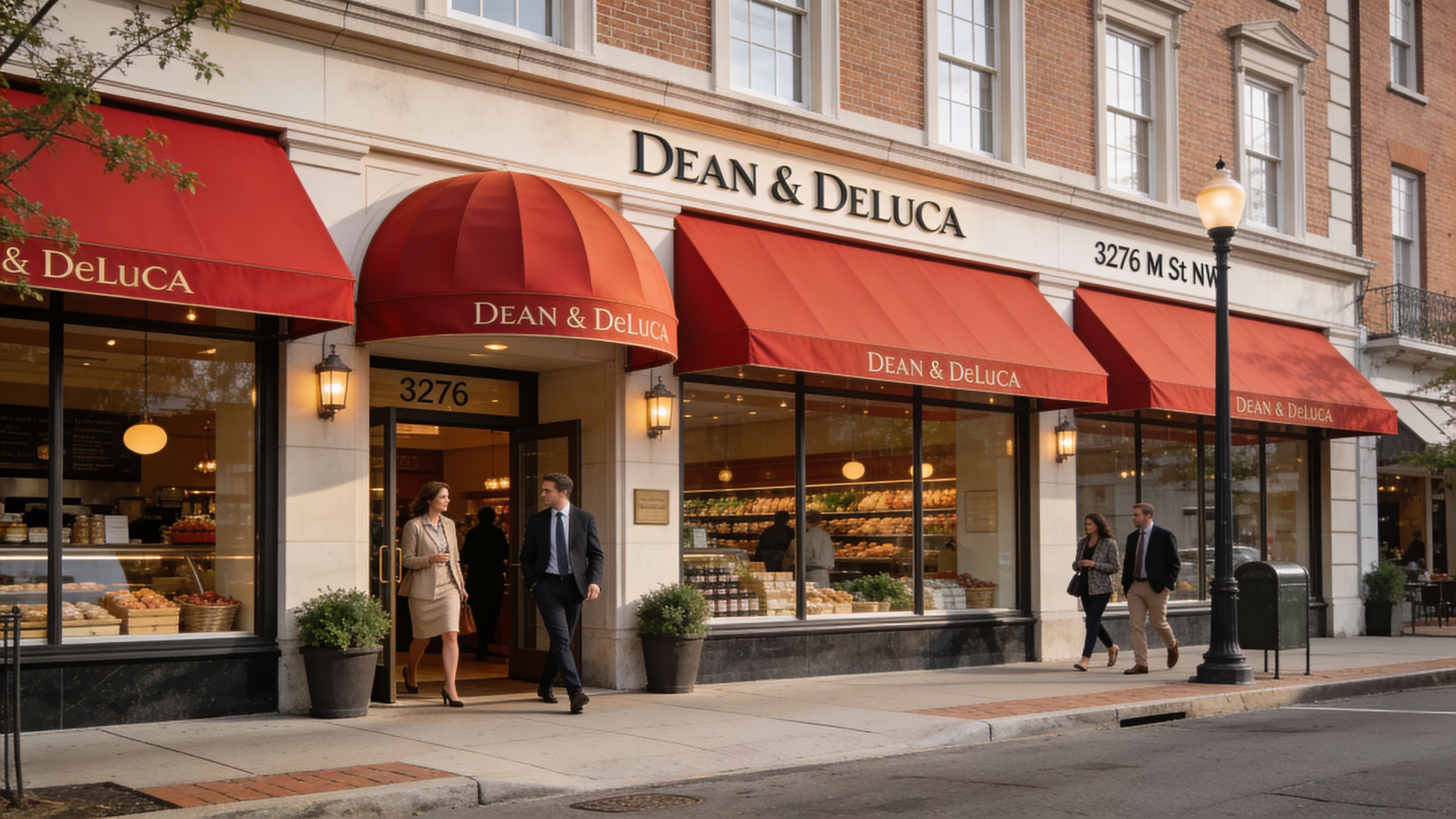
That distinction matters. Plenty of stores can stock expensive products. Fewer can make the whole room feel considered. Dean & DeLuca did that through display, pacing, packaging, and product mix. The result felt closer to a curated showroom than a standard neighborhood market, which is a big reason people still search for it years after it closed.
Why Georgetown was the right fit
Georgetown gave the concept the right audience and the right stage. Residents wanted quality and convenience in one stop. Visitors wanted a polished break from generic chains. Office workers and shoppers could justify paying more if lunch, coffee, or a host gift felt reliably better than the next option down the block.
That is the trade-off premium retail always has to win. Higher prices only hold if the setting, service, and assortment keep signaling judgment.
Dean & DeLuca understood that early. In practical terms, it sold trust. Customers did not have to sort through endless mediocre choices because the sorting had already been done for them. That operating logic still shapes DC retail now, including categories far outside food. If you want a current example of a tightly edited buying experience in another regulated category, this guide on where to buy weed in Washington DC shows how local operators now apply curation in a very different context.
Why the model became harder to sustain
The store’s appeal and its vulnerability came from the same place. A highly designed, high-service concept carries heavier costs and gives operators less room for sloppy execution. Rent pressure in Georgetown only sharpened that problem. CoStar’s reporting on the Georgetown closure tied the shutdown to the economics of a very expensive retail corridor.
At the same time, customer behavior was changing. Specialty coffee got better across the city. Prepared food became easier to get from smaller operators. High-end pantry items moved online and into niche shops. Once the market catches up to your standards, the original pioneer loses some of its insulation.
That is why Dean & DeLuca matters as more than a nostalgia story. Its Georgetown store helped define the premium retail formula in DC. The store is gone, but the template survived. You now see pieces of it across the city in bakeries, specialty grocers, design-forward cafes, and, increasingly, boutique cannabis shops that understand presentation, compliance, and selection as part of the product itself.
Checking the Current Status for 2026
If you’re wondering whether dean & deluca dc is coming back, the answer is no. As of 2026, there are no official plans for Dean & DeLuca to return to DC, and the old 2013 health-related closure that still shows up in search results was not the reason for the final 2019 shutdown, according to Washingtonian’s coverage of the health department closure and later context.
That distinction matters because search results often mash separate events together. Someone sees a temporary closure article, assumes the store reopened, and then expects the location to still be active years later. It isn’t.
What not to rely on
A few signals tend to confuse people:
- Old travel listings: They often stay live long after a business closes.
- Trip planning threads: These can linger for years without updates.
- The 2013 health story: It was temporary and unrelated to the final exit.
If you’re visiting DC and trying to plan purchases in a legal, current, no-guesswork way, use up-to-date local guides instead of old directory pages. For cannabis specifically, this local explainer on where to buy weed in Washington DC is more useful than relying on outdated search snippets.
What is replacing the void
The market didn’t stand still waiting for a revival. The same Washingtonian source notes a 25% rise in local pop-up gourmet markets, which tells you something important about current demand. People still want premium food experiences. They just want them in more flexible formats than the old flagship gourmet model.
That’s been the practical reset in Georgetown and nearby neighborhoods. Stop waiting for the exact old institution to return. Start looking at who’s serving the same instincts now: curation, service, product knowledge, and a sense that someone cared about the details.
Top Local Alternatives for Gourmet Food and Coffee
Dean & DeLuca left a lasting gap in Georgetown’s premium food scene, and that gap still matters for nearby neighborhoods such as Glover Park and Kalorama, as noted in Georgetowner’s reporting on the closure. The best replacements aren’t clones. They’re specialists.

Here’s how I’d break the field down if you care about quality first and convenience second.
Where to go depending on what you miss
If you miss the market feel:
Each Peach Market is a strong fit. It leans neighborhood-first, but the appeal is the same old premium-grocery instinct: good pantry goods, thoughtful prepared foods, and shelves that feel selected rather than stuffed.
If you miss the polished all-day stop:
Tatte Bakery & Cafe works well. It isn’t trying to be a gourmet market, but it does deliver the kind of attractive, reliable, upscale coffee-and-pastry environment many former Dean & DeLuca regulars want day to day.
If you miss curated convenience:
Foxtrot entered that lane with a more modern playbook. The draw is speed plus presentation. It’s for the person who wants a nicer snack, drink, or host gift without making a project out of shopping.
If you miss destination-level baked goods and strong coffee:
Places like Yellow or other chef-driven cafe concepts scratch that itch better than many full grocery operators do. They’re narrower in scope, but often stronger on execution.
A useful side-by-side view helps.
| Establishment | Best For | Neighborhood(s) | Vibe |
|---|---|---|---|
| Each Peach Market | Specialty groceries, prepared foods | Mount Pleasant | Neighborhood market with serious curation |
| Tatte Bakery & Cafe | Pastries, coffee, light meals | Multiple DC locations | Polished, busy, design-forward |
| Foxtrot | Grab-and-go premium staples | Multiple urban locations | Modern convenience with nicer taste |
| Yellow | Coffee, baked goods, casual high-quality bites | Georgetown and beyond | Chef-driven cafe, casual but exacting |
For readers comparing premium neighborhood experiences of different kinds, this look at Space Bar DC is another example of how DC venues build loyalty through personality and curation instead of scale.
A quick visual can help if you’re planning a food-focused day in the city.
How to choose the right alternative
Don’t overthink the brand comparison. Use this simple filter:
- Need pantry items and dinner support? Go to a specialty market.
- Need coffee, pastry, and a place to sit? Choose a bakery-cafe.
- Need a quick but refined stop between errands? Pick a polished convenience concept.
- Need something giftable or host-friendly? Look for stores with edited packaged goods, not just prepared food.
Most people who say they miss Dean & DeLuca are actually describing a standard of selection, not a single product category.
That’s why the best substitute depends on the errand.
Exploring Curation in DC's Premium Cannabis Scene
Walk into a strong dispensary in DC and the familiar part is not the product category. It is the feeling that someone edited the room on purpose.
That is the part of Dean & DeLuca people still respond to. The Georgetown store trained customers to expect selection with standards behind it. Premium cannabis retail, at its best, applies that same discipline to a different set of products, customer questions, and compliance rules.

The comparison is not superficial. Good operators in both categories make hundreds of small decisions that shape quality before a customer buys anything. They control storage conditions, keep inventory moving, remove weak sellers, and present choices in a way that helps people decide without feeling rushed or confused.
In cannabis, that matters even more because the trade-offs are less obvious to a first-time buyer. A menu can look impressive and still be poorly curated. Too many overlapping SKUs, vague strain descriptions, or stale flower undercut the whole premium pitch.
The principles that carry over
A serious dispensary handles inventory like a specialty retailer, not a convenience shelf.
- Product care matters: Better shops use controlled storage and careful handling to protect freshness, aroma, and consistency.
- Rotation matters: Fast-moving items usually stay in better shape than products that sit too long on the menu.
- Editing matters: A shorter, better-explained menu often serves customers better than a giant list with no context.
- Staff judgment matters: Value lies in not reciting strain names. It is helping someone choose a format, potency range, and effect profile that fits the situation.
That last point is where Dean & DeLuca’s legacy shows up most clearly. Curation is not just display. It is selection plus explanation.
A visitor may want something discreet and low-odor. A local customer may care more about repeatable effects, price discipline, and whether a shop keeps its menu coherent from week to week. Those are retail questions, not trend questions, and the best cannabis shops answer them the same way the best gourmet stores do. With standards the customer directly experiences.
For readers who want another example of how that boutique approach shows up locally, this look at Gifted Curators DC’s retail style is useful context.
A premium cannabis shop earns trust by narrowing choices intelligently, handling products carefully, and making quality visible before the sale.
That is why Dean & DeLuca still matters here. The store closed, but its best idea survived. In DC, curated premium retail now shows up in places many visitors would not have expected, including well-run cannabis dispensaries.
How Mr. Nice Guys DC Serves Visitors and Locals
Visitors and newer patients usually need two things at once in DC. They need a compliant process, and they need someone to make the process feel manageable.
That’s where a well-run dispensary stands apart. In practical terms, the best operators don’t assume customers already know the difference between flower, cartridges, edibles, pre-rolls, tinctures, or topicals. They walk people through it in plain language and keep the buying experience orderly.

What a practical visit looks like
A visitor staying near Georgetown might want something discreet and straightforward. A local patient in Tenleytown might want reliable repeat ordering and a menu that rotates without becoming chaotic. In both cases, what helps is the same set of basics:
- Clear guidance: Staff should explain formats, expected effects, and how to start conservatively.
- A curated menu: Too many options with no context slows people down.
- Convenient fulfillment: Pickup, curbside, or delivery can matter as much as product selection.
- Consistency: The customer should know the shop takes compliance, service, and product handling seriously.
Why education matters more than hype
For first-timers, the most common mistake isn’t choosing the “wrong” brand. It’s choosing the wrong format or strength for the occasion. Someone who wants an easy evening may do better with one approach than with a fast-acting inhale or a stronger edible.
That’s why educational content matters. This guide to medical cannabis 101 before your first visit to Mr. Nice Guys DC is the kind of resource people should read before they order, especially if they’re new to DC’s system.
A good retailer lowers friction. It explains the rules, narrows the choices, and gives customers a reason to come back because the process felt clean and professional.
That’s the modern version of curated retail in Washington. Not necessarily a gourmet market on M Street, but the same expectation that the business has taste, standards, and staff who know how to guide you.
If you want that kind of polished, education-first experience in DC, Mr. Nice Guys DC is worth a look. The team focuses on compliant service, curated product selection, and clear guidance for both first-time and experienced shoppers, with options for pickup, curbside, and delivery.
Mr Nice Guys DC
At Mr. Nice Guys DC, we’re more than just a cannabis delivery service — we’re passionate advocates for quality, convenience, and community. With years of experience in the cannabis industry, our team is dedicated to educating and empowering customers across Washington, D.C. Whether you're a seasoned user or just starting your cannabis journey, our blog delivers trusted tips, product insights, and the latest updates from the world of weed. Stay informed, stay elevated.
